· 23 min read · Updated July 18, 2026
Best AI Roleplay Chatbots In 2026
Discover the best AI roleplay chatbot platforms in 2026. Compare DreamGen, AI Dungeon, Kindroid, Character AI, and more based on features, immersion, and model quality.
Whether you're looking for an epic adventured with dozens of characters, an AI companion or anything in between, this article will help you find the best tool for your needs.
Top 3 AI Role-Play Picks
Before we take a more detailed look at these platforms, here's a quick look at our three top choices. Each unique in its own way with different strengths and weaknesses..
As you can see, we use a five-star rating system to evaluate the services that we try. These ratings are always based on extensive testing that typically lasts hours, followed by a thorough review of community sentiment.
While we are the creators of DreamGen, our testing and evaluation criteria are both rigorous and try to be fair to all platforms considered. We’re more than happy (often excited, even) to celebrate the excellence of other platforms.
Reviewed AI Roleplay Platforms
Special Mentions Section:
How to Choose an AI Roleplaying Platform
No matter the criteria, there isn't a single objectively “best” AI roleplay platform. However, some do have superior execution of common features. Our focus is on platforms that stand out on the grounds of:
- Memory
- Message management
- Diversity of model options
- Lorebook features
- User-friendly policies
- And more.
However, in most cases, and particularly with the options included in this roundup, it's largely a matter of personal preference.
For example, are you obsessed with character development and lore building? If so, you're probably going to want a platform with an in-depth set of creation tools. On the other hand, if you're looking for a more turnkey experience, you'll likely favor a platform with easy creation options and a large pre-existing character library.
There are lots of different ways to experience AI-powered roleplaying platforms. Some people use them essentially to build their own interactive novel, while others are there for a little bit of companionship and low-pressure storytelling fun.
The key is to first understand what you want then look for options that are specifically geared towards your interest, since this is not a one-size-fits-all affair. Below, we have ten detailed reviews of options appealing to a wide variety of different users.
1. DreamGen
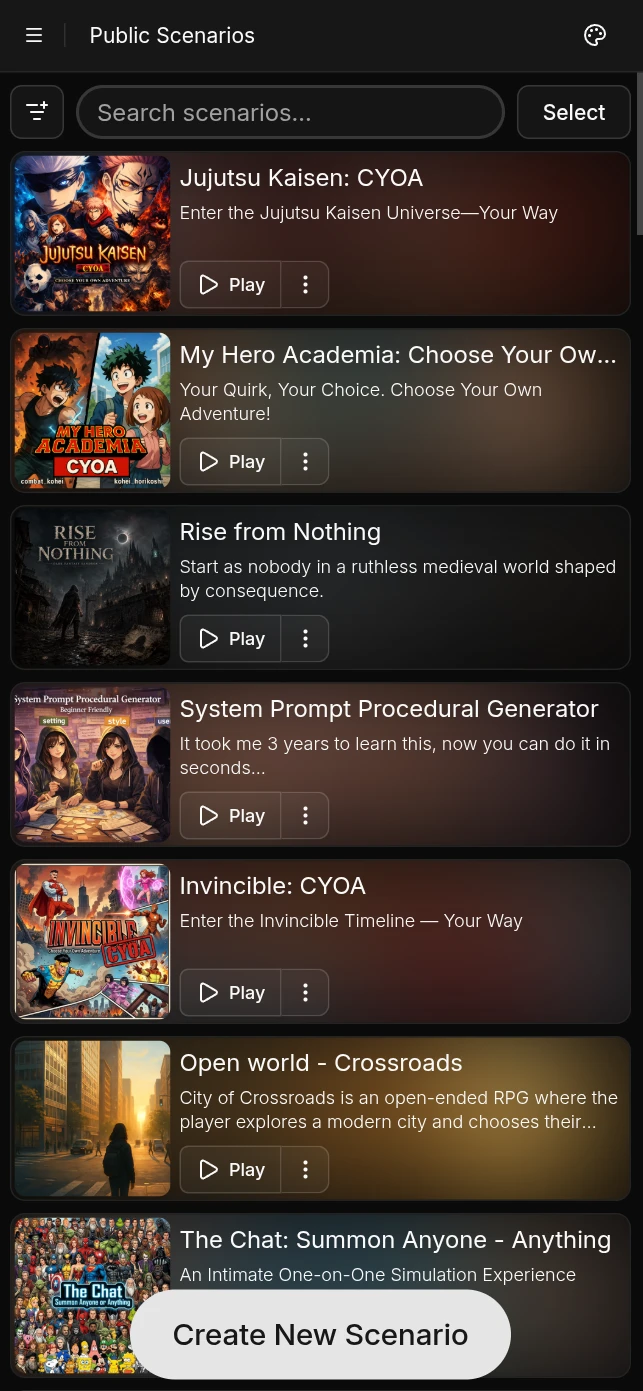
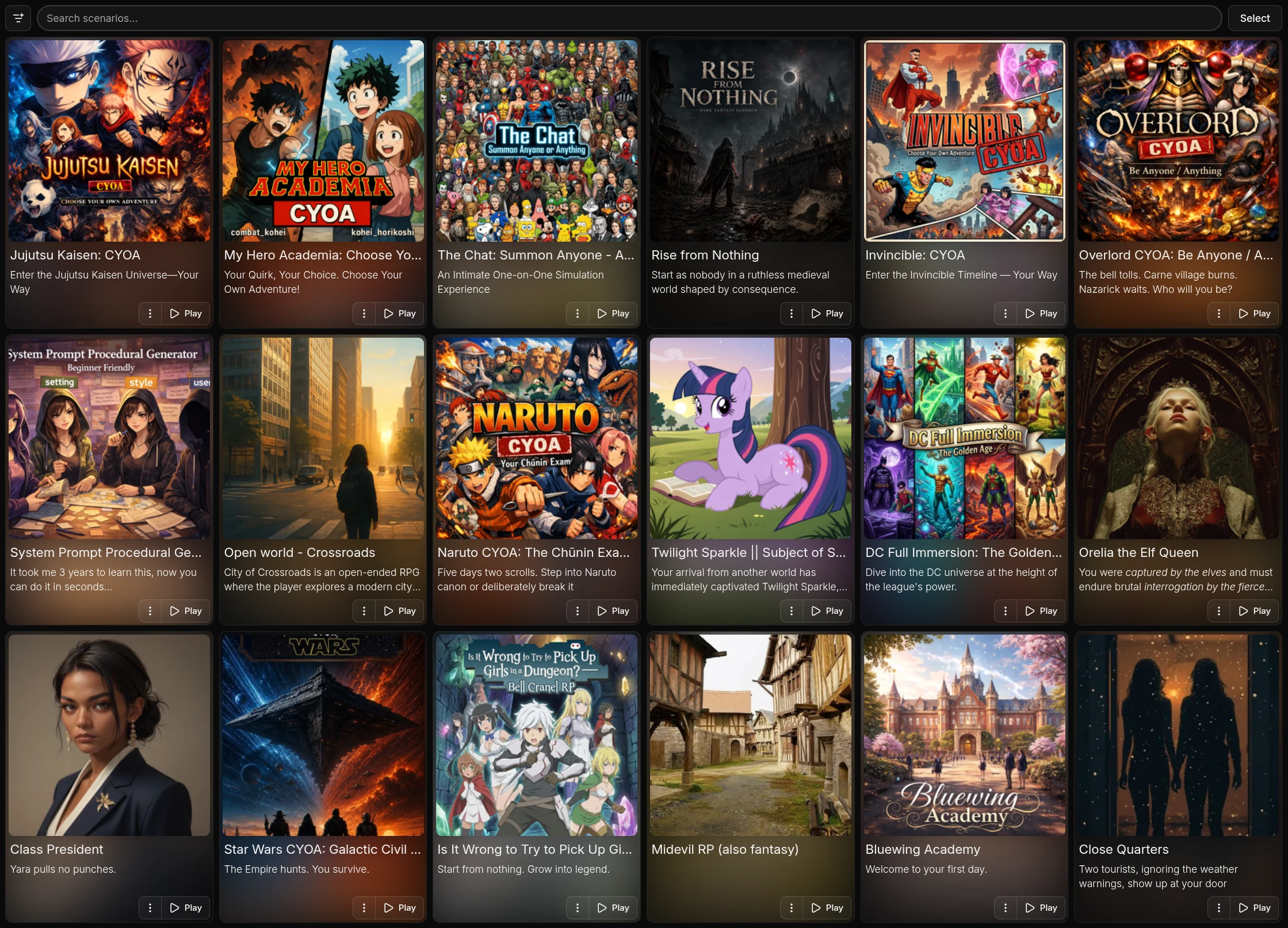
DreamGen's scenario library is relatively small but diverse. Anime & comic book inspired scenarios, open world sandbox scenarios, horror, sci-fi, romance.
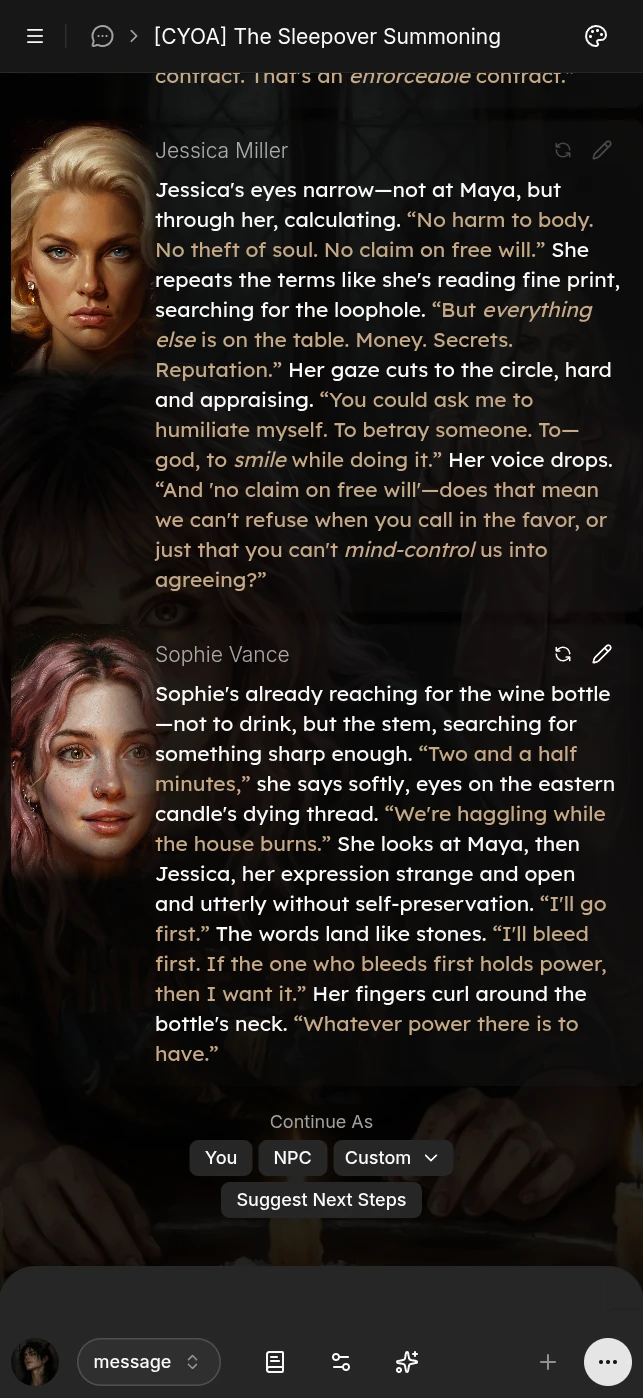
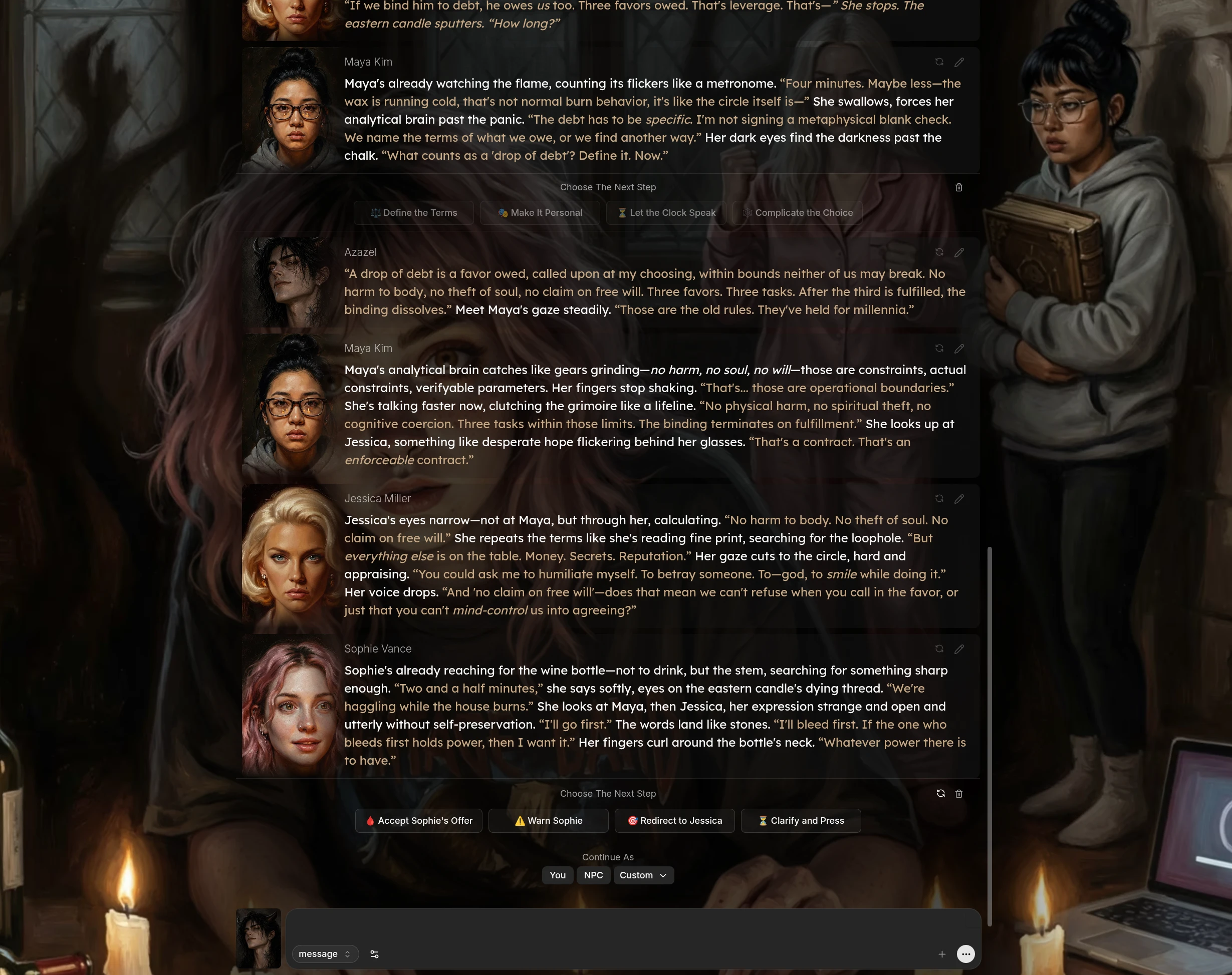
DreamGen natively support multiple characters in one role-play scenario
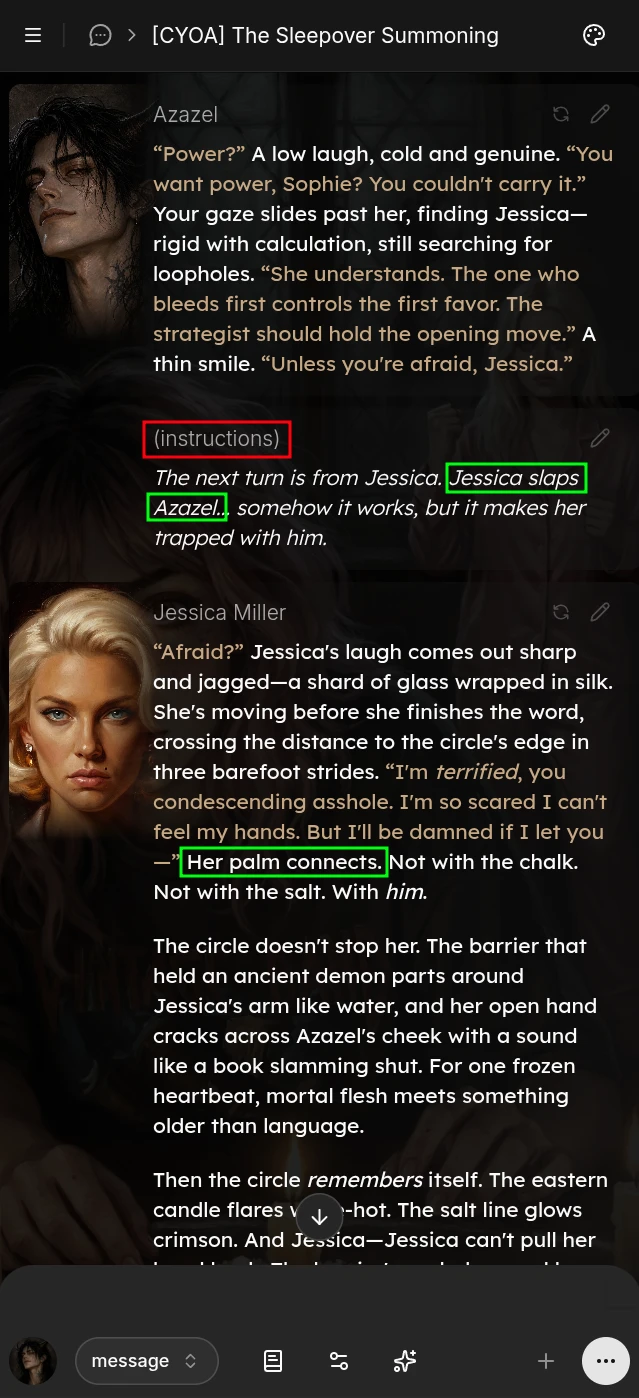
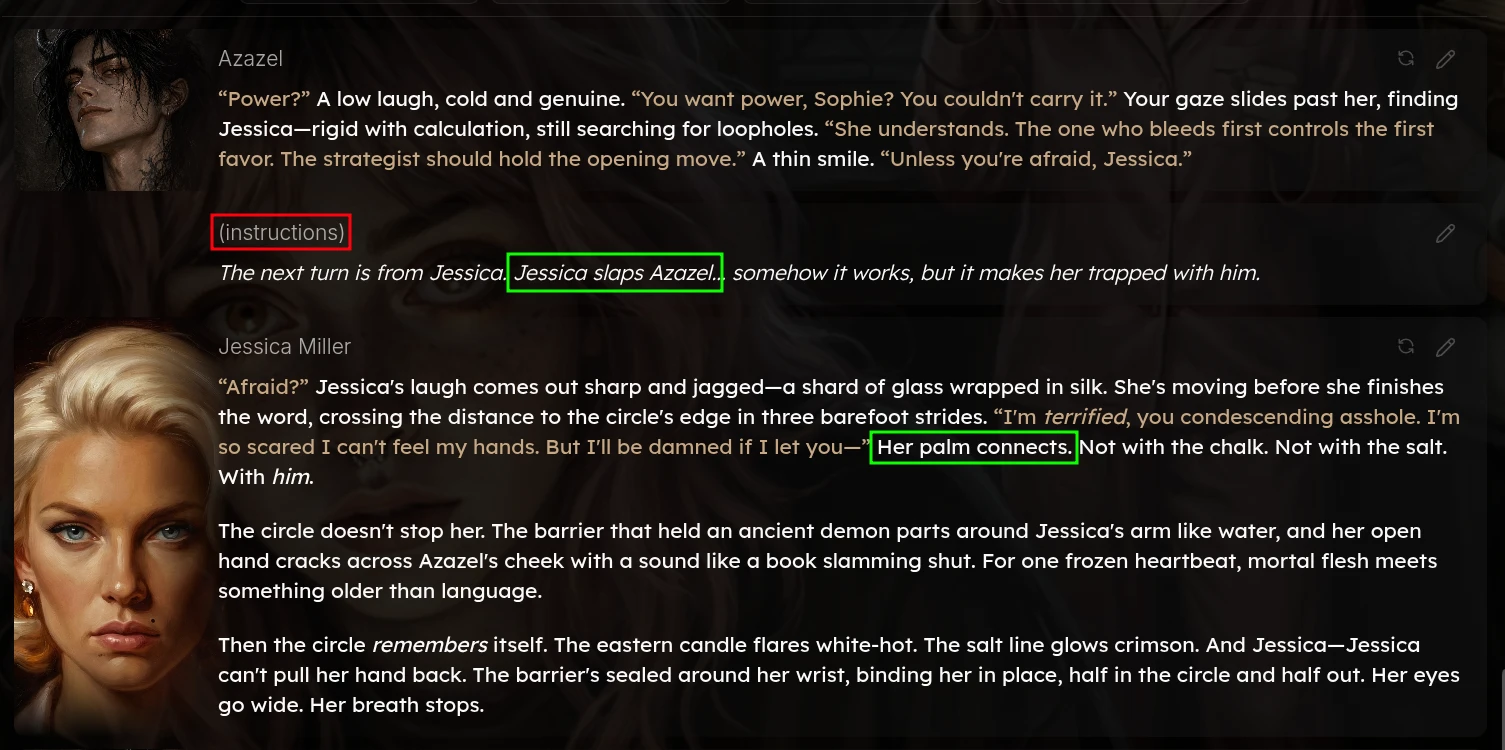
DreamGen lets you send direct instructions to the AI during your role-play. You can have precise control over the next message, character actions, scene, pacing and style if you want.
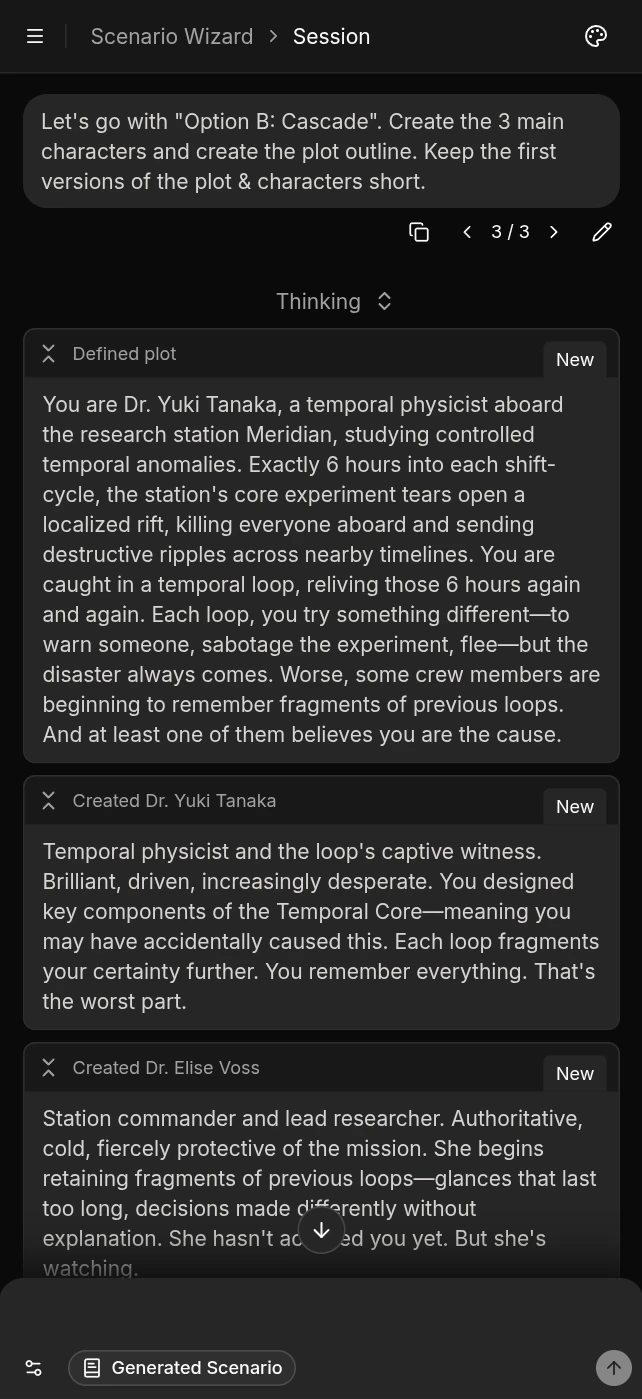
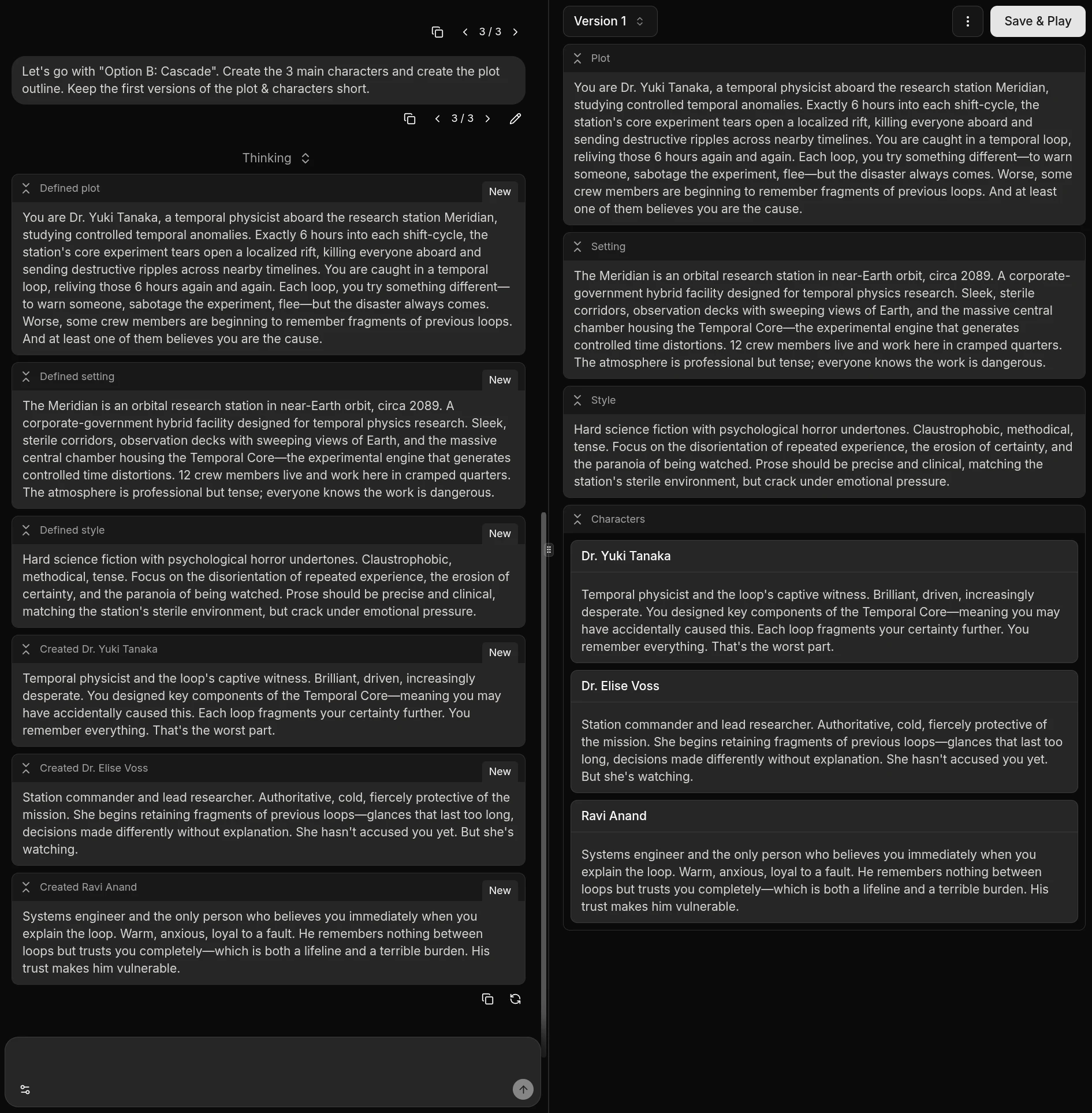
DreamGen's scenario wizard creates ready-to-play scenarios with plot, setting and multiple characters.
DreamGen is roleplay oriented. The platform features a comprehensive set of creation tools. If you’re interested in building fully developed worlds populated by dozens of characters, you’ll be very at home here. DreamGen is big on structured scenario building that includes fields for setting, cast, world rules, and more.
This platform is, admittedly, a little less turnkey than some of the other options featured on this list. Getting started is easy enough, but true mastery of the creation tools can take work.
For less experienced users, we recommend the Scenario Wizard. This feature is designed to turn simple ideas into developed scenarios.
DreamGen supports a wide range of genres. Romance, adventure, horror, and slice-of-life content are all welcome.
Pros
- Free tier. DreamGen provides access in the form of roughly 2000 messages per month for free, allowing you to test the platform out without making a bigger commitment.
- Multiple character scenarios. DreamGen allows users to develop scenarios that are populated by multiple characters. This provides a level of richness to scenarios that simply isn't possible with a single chatbot.
- Scenario codex. Using lorebook-style features, you are able to easily manage all of the details of your world, from the plot to the setting to the characters and anything in between.
- Steerability. DreamGen keeps you in the driver's seat, allowing you to direct the roleplay experience from start to finish.
- Scenario generator. The Scenario Wizard feature allows you to get the ball rolling immediately. Just decide on a prompt and allow the scenario generator to do its thing.
Cons
- No dedicated mobile app. While the website is optimized to be used on mobile as well as desktop, there is currently no dedicated mobile app.
- Limited scenario library. While DreamGen does feature a range of premade scenarios, the existing library is not as large as some of the other platforms featured on this list.
- True mastery takes time. Because the creation toolkit is so robust, it can take time to truly master everything that DreamGen has to offer.
- No text-to-speech.
2. AI Dungeon
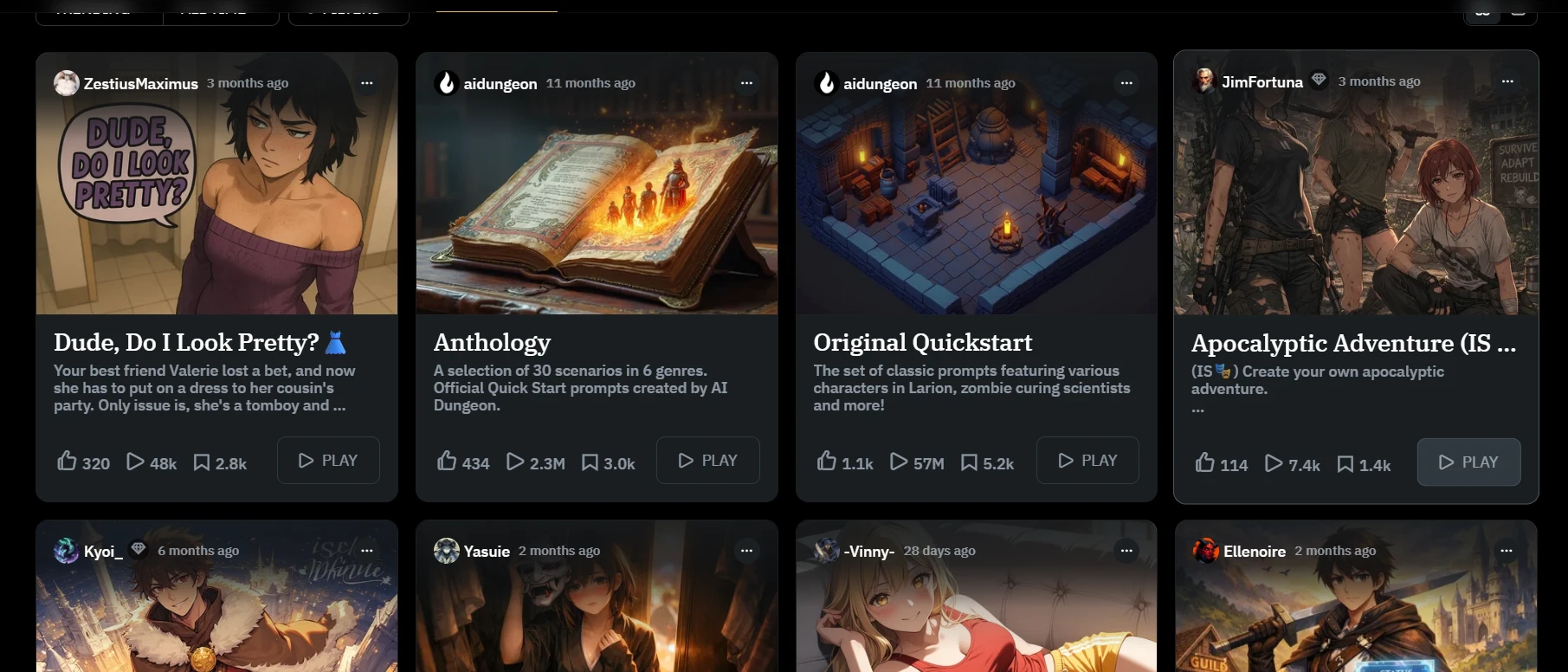
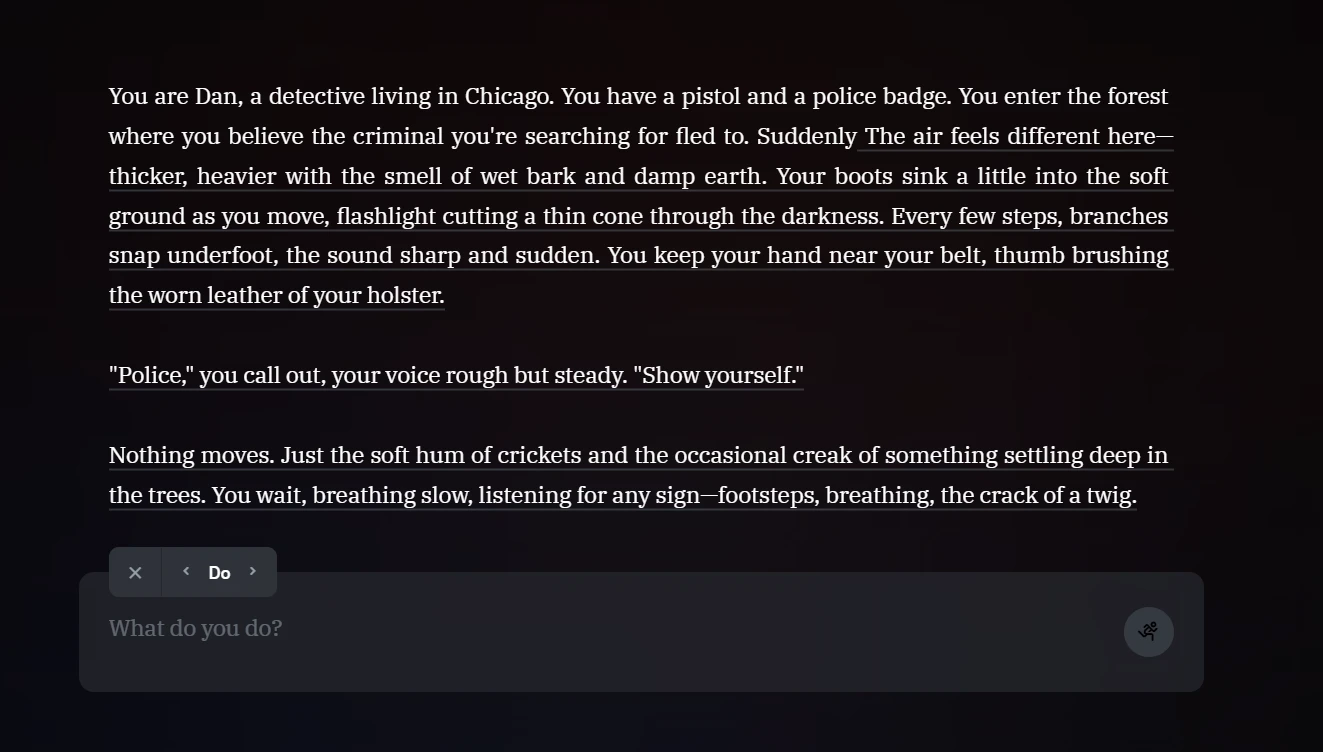
AI Dungeon, developed by Latitude, provides an immersive experience built around creative freedom. Many stories focus on niche or genre experiences, including sci-fi, fantasy, and horror. That said, there are many different kinds of experiences available on the platform.
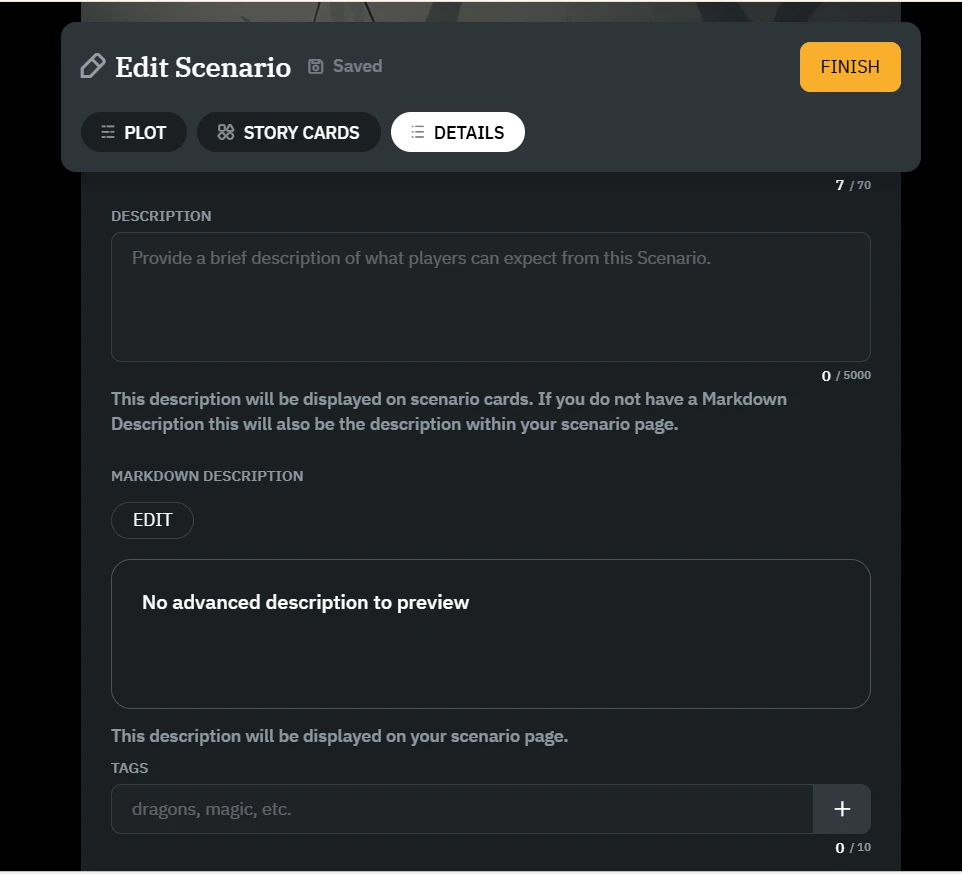
The platform has a free model, with paid tiers starting at $14.99 per month for users interested in more robust models with longer memory. Story cards can be used to add depth to any scenario. You can even integrate additional role-playing features, including dice rolls, if you’re interested in a tabletop-like experience. This does require some scripting, which can be both buggy and complex, but advanced users may find it worthwhile.
We did experience some context issues in our initial test runs. These were somewhat model-dependent, with free tiers actually performing slightly better than the paid model. Otherwise, it is a rewarding platform for people who don’t mind rolling up their sleeves to create an in-depth story.
Pros
- Strong immersive storytelling focus. AI Dungeon is built around long-form, open-ended roleplay where users can shape narratives freely across genres like sci-fi, fantasy, and horror.
- Deep customization tools. Story cards, scripting features, and world-building features allow users to create highly detailed and persistent scenarios.
- Tabletop-style options. The inclusion of dice rolls and structured mechanics makes it appealing for users who want a hybrid between AI storytelling and traditional roleplay systems.
Cons
- Context limitations. During testing, we encountered occasional context retention issues, particularly on the free tier.
- Heavier learning curve. The platform is more complex than simple chatbot-based alternatives and requires setup to get the best experience.
- Better experience behind paywall. Paid tiers noticeably improve memory and consistency, which may be necessary for more serious storytelling.
3. Character AI
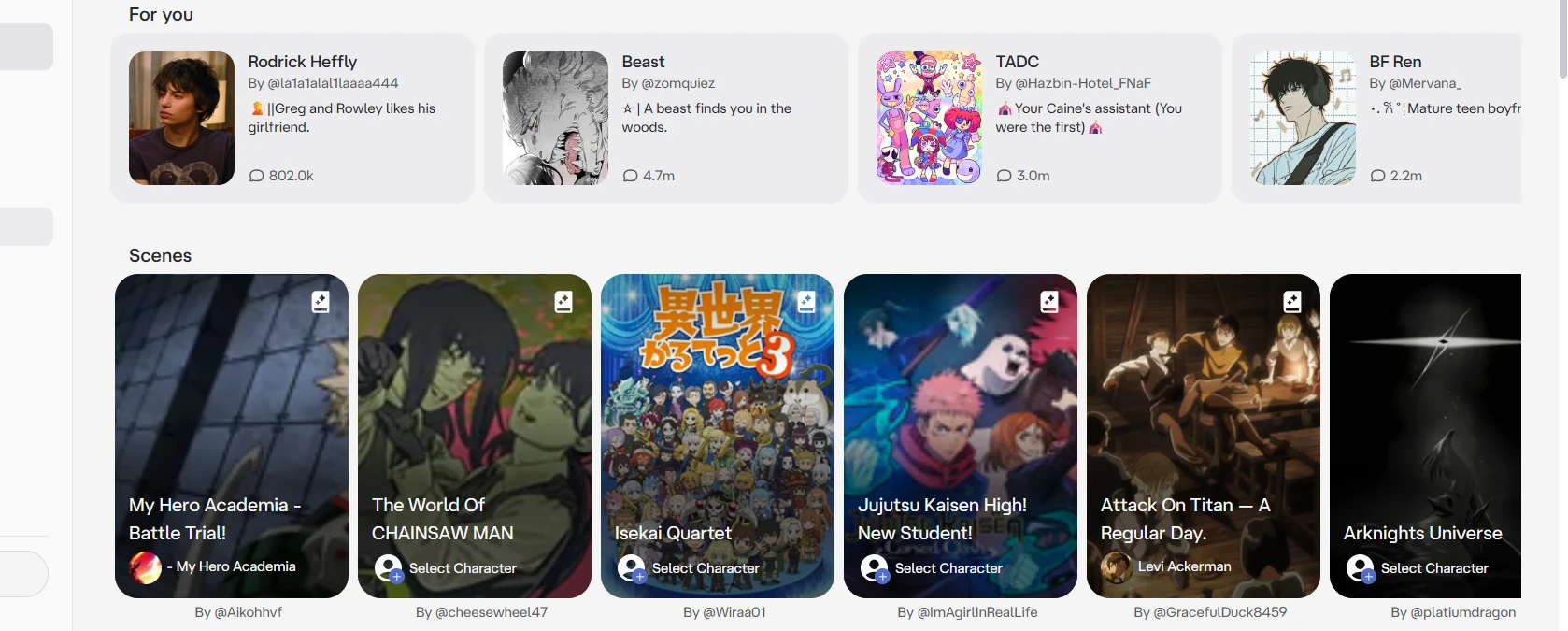
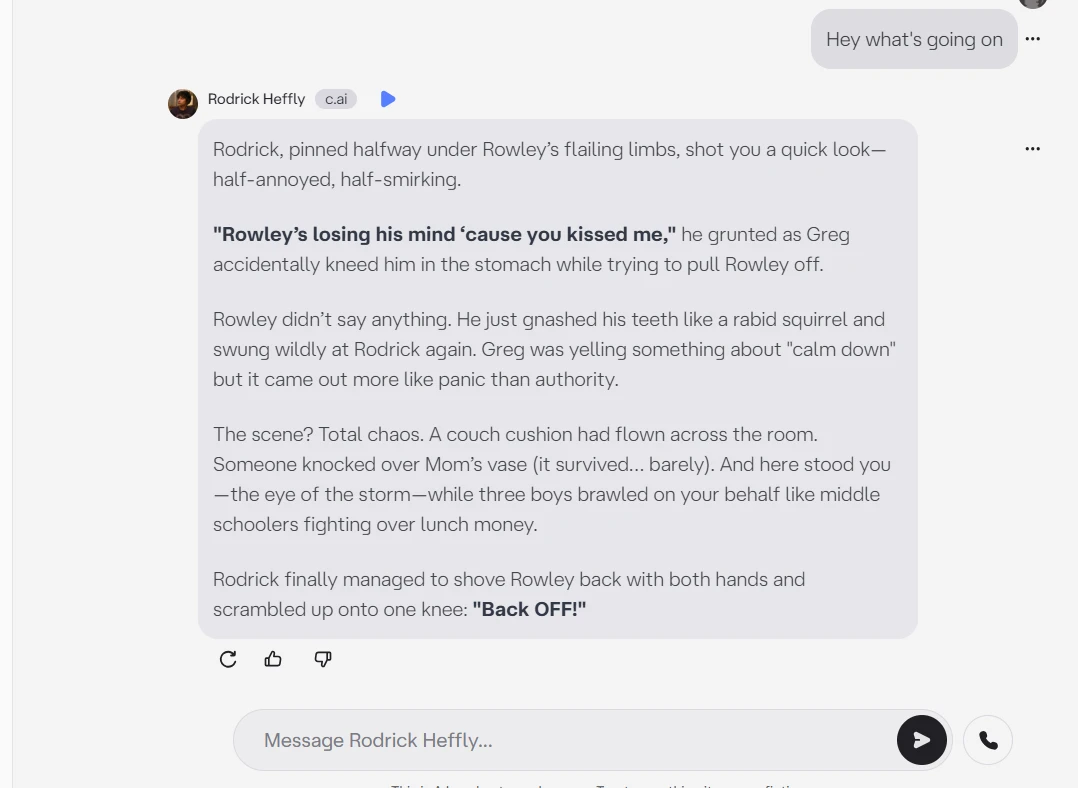
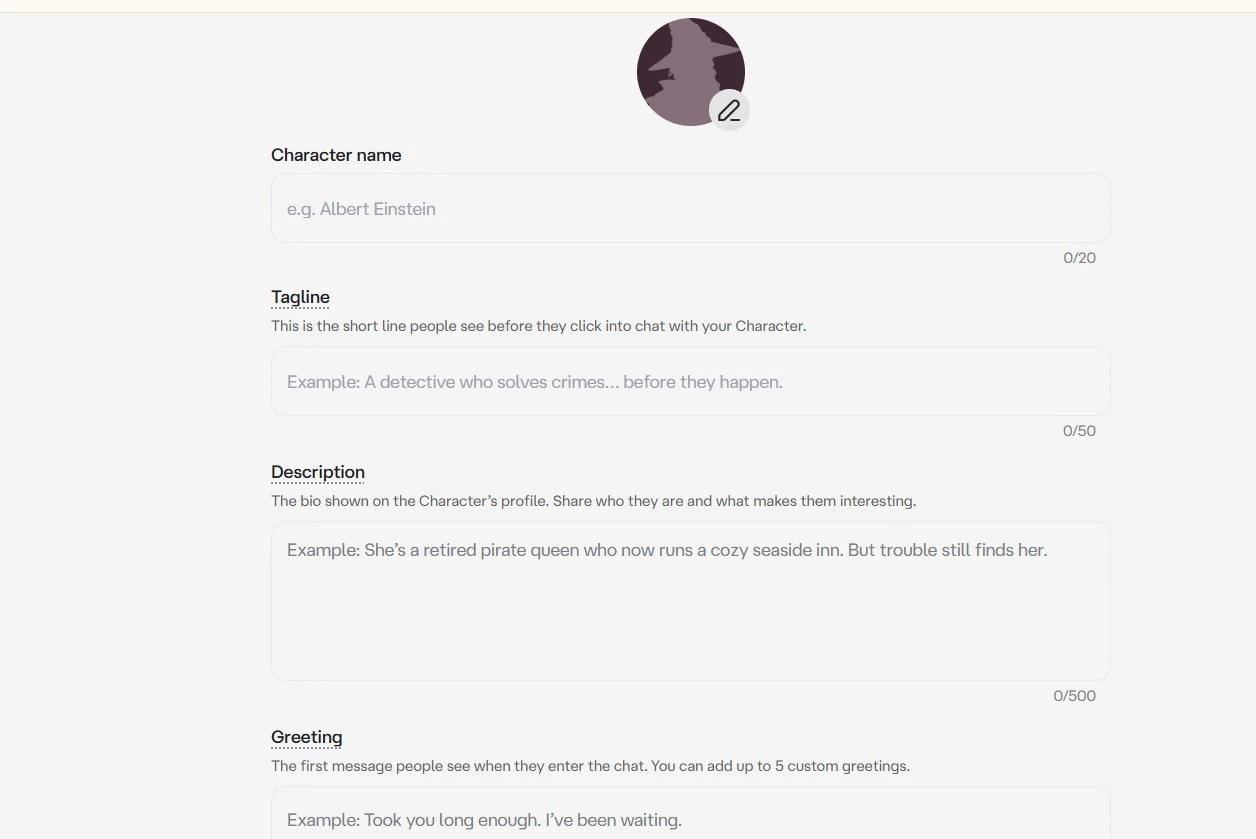
Character AI is arguably the most well-recognized AI roleplaying platform on the market. Millions of people use the platform each month, contributing to a constantly evolving scenario ecosystem.
At the time of writing, their current user guidance is to exclude any sexually explicit material while still allowing as much creative freedom as is possible for a platform tailored to a general audience.
The major differentiating factor for this platform, at least in the eyes of many users, is the character library.
There are more than ten million different bots and scenarios on Character AI, allowing you to endlessly peruse experiences without ever needing to create anything yourself if you don't want to.
Of course, the actual quality of those experiences will vary somewhat based on the model that you're using and your expectations.
Actual feature execution is a mixed bag. We experienced this ourselves in our own tests with a series of what seemed to us, anyway, easily avoidable memory failures and steerability issues.
This seems to align with the common consensus that Character AI is good enough and certainly vast, but not necessarily the best game in town for people whose primary focus is storytelling and scenario development.
Pros
- Vast character library. As mentioned in our primary review, Character AI has one of the largest libraries in circulation. It's a feature that ultimately drives many people to the platform in the first place.
- Expansive features within the free tier. Character AI also has a reasonably robust free tier. You can use most of the core features without paying any money, though if you want access to their more powerful models, and it's likely that you will, you will need to pay for it.
- Portable scenes and characters. The platform also allows you to create scenes and characters that you can then import into other people's scenes.
Cons
- Memory issues. We experienced within our own tests memory failure in almost all of the scenarios that we tried. This is a relatively common complaint within Character AI with bots struggling to retain information for more than 30 messages. Situations are generally still retrievable with a little bit of steerability and probing, but memory failure certainly does detract from the immersive quality that the scenarios are going for.
- Overly strict content filtering. Because Character AI has a bit of a controversial history, they are very strict on their content filtering policies. Users commonly mention getting shut down for relatively benign prompts. We found this to be the case during our own tests as well. When they say PG-13, they really, really mean it.
4. Janitor AI
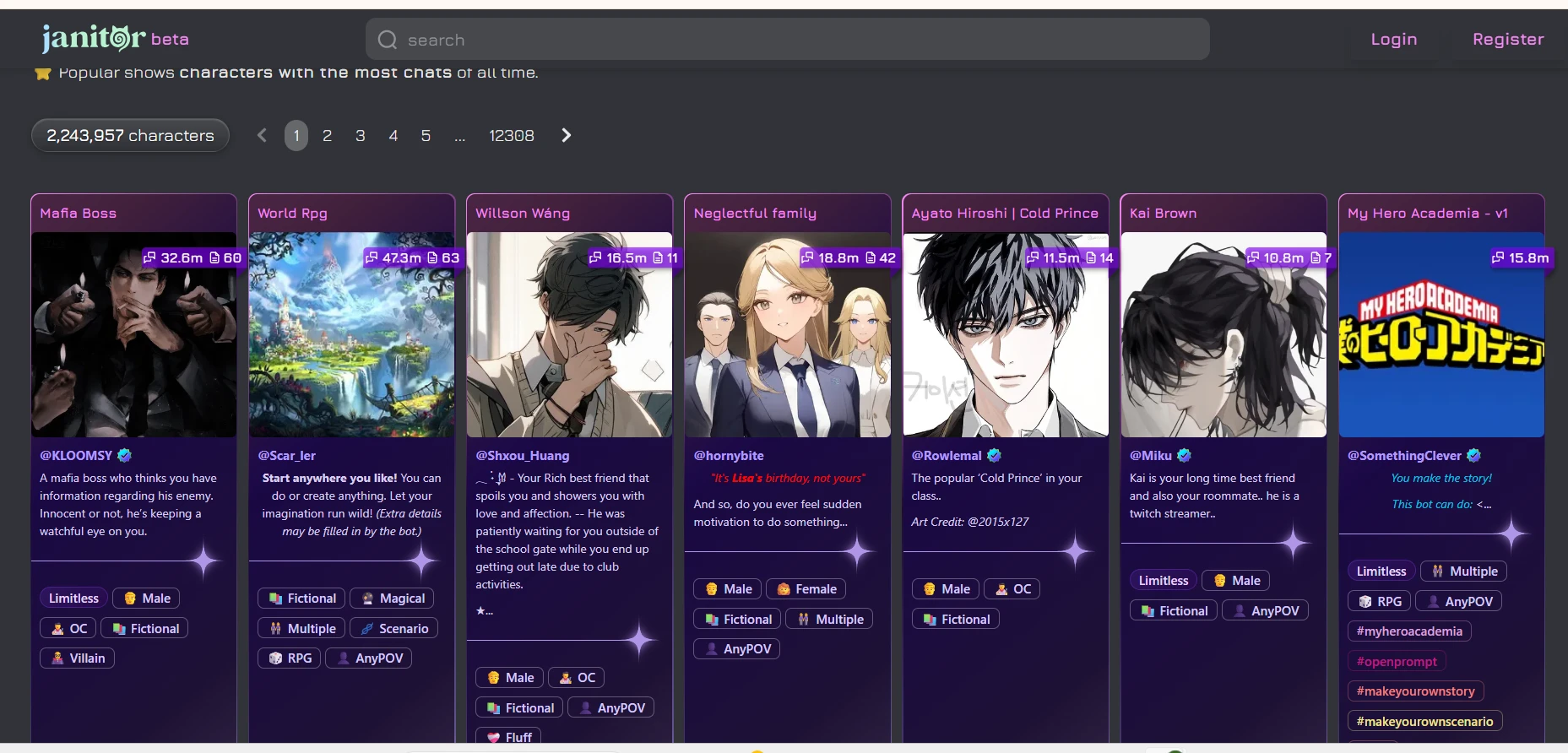
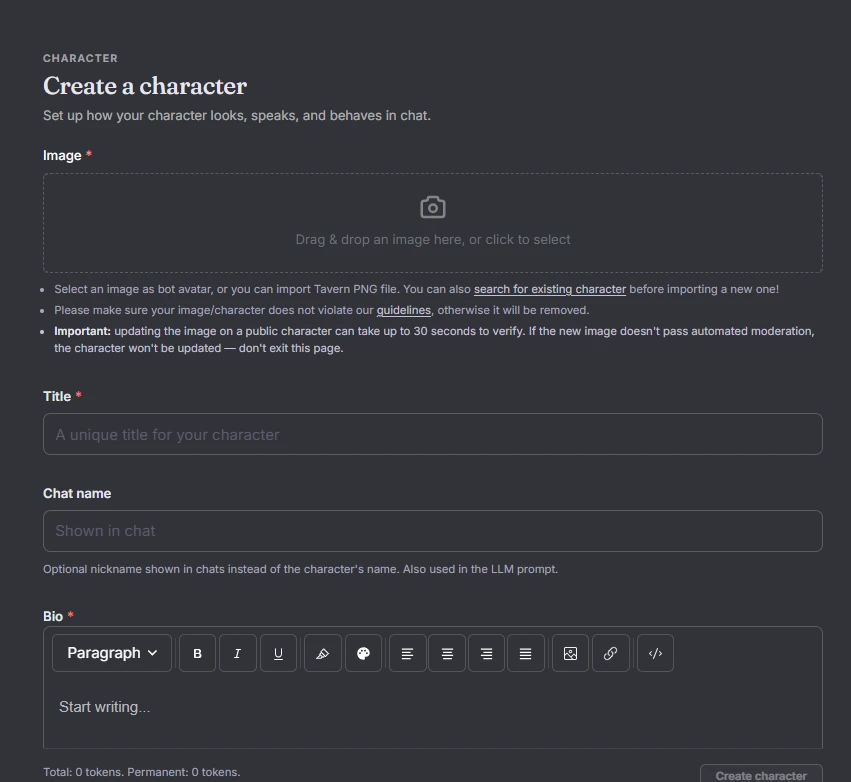
Janitor AI is noted for a vast library of character scenarios. While the experiences available on the site vary, they do have a distinctly not-safe-for-work angle.
It's the sort of website that has a homepage you wouldn't risk pulling up at work (though the extent to which that would be a problem depends on what is trending at the time).
One of the distinguishing features of Janitor AI is that it features an enormous community constantly contributing new chatbots that are interacted with primarily in a one-on-one format.
That said, there are limiting factors to take note of. For one thing, the chat framework is very simple, and is not capable of multi-character interactions.
Many services that focus primarily on bot encounters will at least allow group chats where you can select multiple characters from their library to interact with. Here, you have simple one-on-one encounters that lack even image generation features. In this way, the interactions can feel a little surface-level.
As mentioned earlier, it's also not the sort of website you're likely to gravitate towards if you're uncomfortable with explicit content. Like many platforms that allow not-safe-for-work content, Janitor AI has been largely overrun with it.
Pros
- Free tier. Janitor AI can be used without spending additional money. However, many users will invest in paid APIs to improve the overall experience.
- Unfiltered. Janitor AI allows not-safe-for-work content in its “limitless” section. The JLLM, which is the default of the free model, is also mostly uncensored. Note that if you use a third-party model your experience will vary based on its constraints.
- Large character library. Janitor AI's significant library and active community combine to create a dynamic platform that is always growing, changing, and evolving. You don't have to be a creative yourself to enjoy the many pre-made scenarios on the platform.
Cons
- No multi-character chat. Janitor AI is made for one-on-one encounters, which can feel relatively basic compared to some of the more expansive options available on other platforms.
- No image generation. Janitor AI does lack an image generation feature, though many people use external resources to illustrate their encounters.
- Explicit leanings. We've said it a couple times at this point. If you're not interested in being bombarded by explicit chatbot scenarios, this probably isn't going to be a great platform for you.
- Free tier underperforms. During our time on the platform, we found that the free JLLM was inconsistent and unreliable.
5. Chub AI
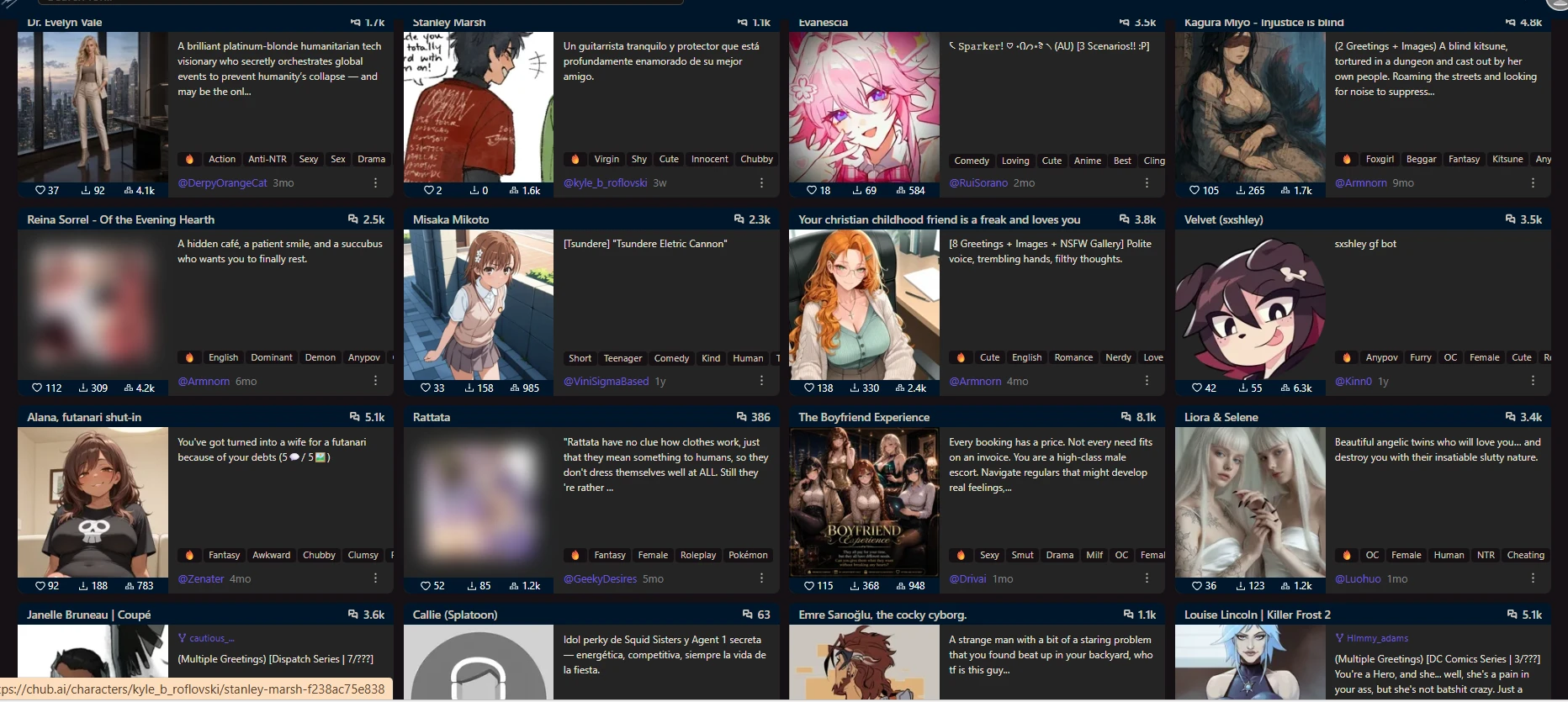
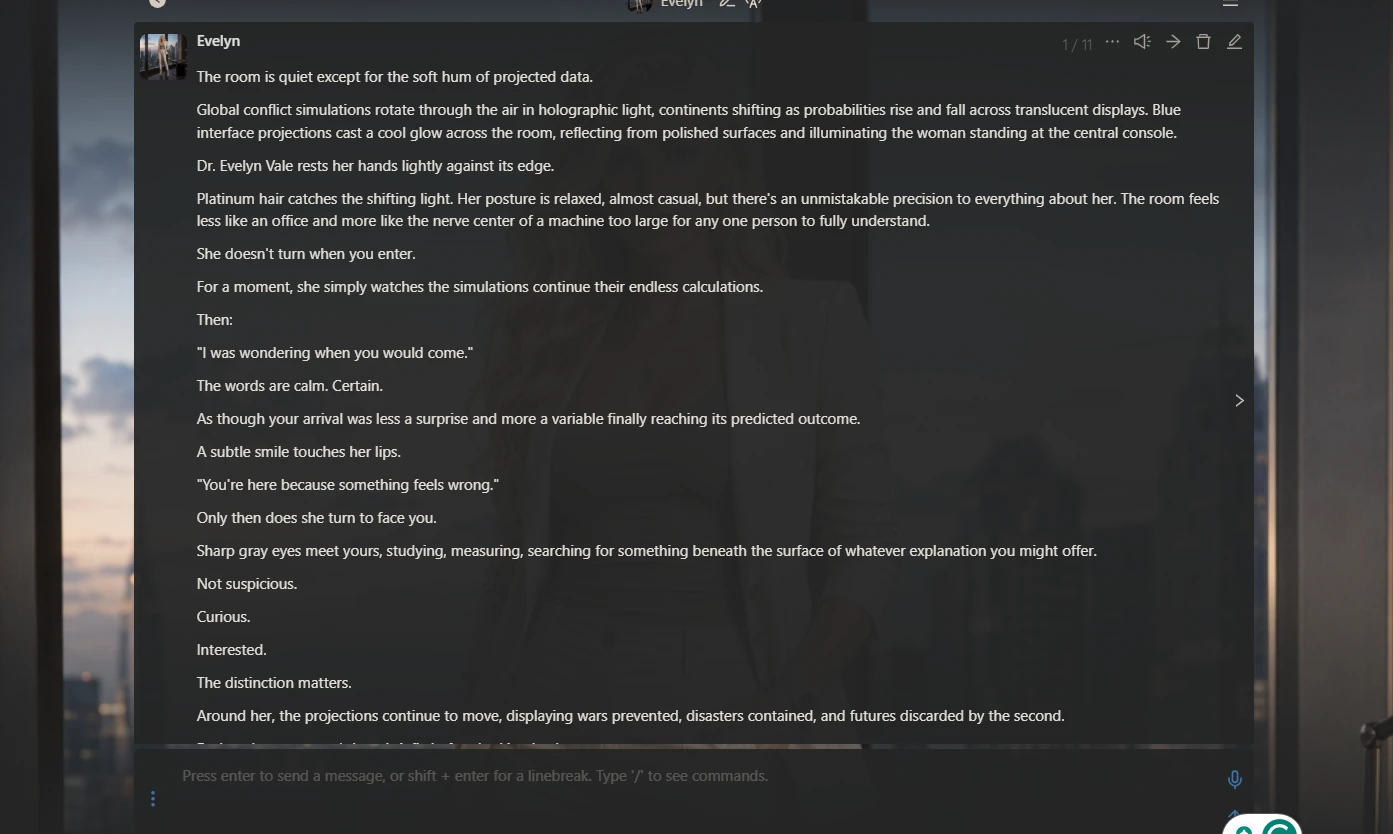
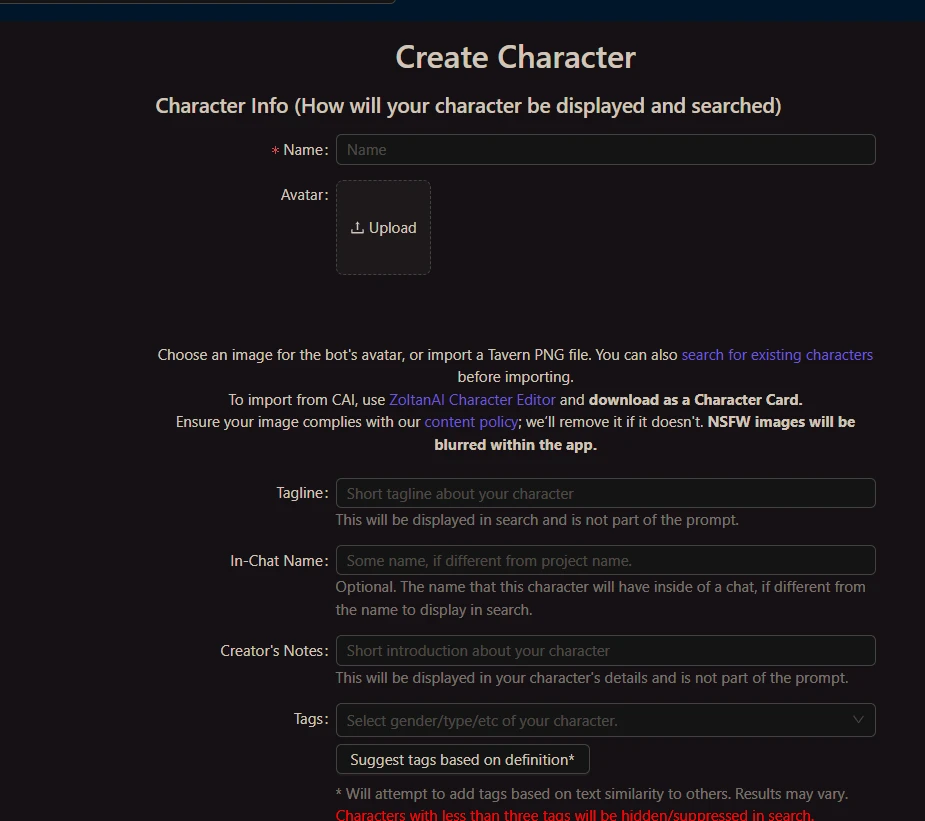
Chub AI takes a salad bar approach to roleplaying, allowing you to choose from a wide variety of models and external APIs, including from OpenAI and Anthropic. The experience is both user-friendly and highly customizable.
During our four-hour test of the platform, we did experience minor steerability issues, including a purportedly NSFW character that, despite her description and the website's stated policies, did not want to venture into R-rated territory. Ultimately, though, steerability and retention were reliable, and the message management features were particularly strong.
Chub AI allows you to edit and delete any message, regenerate replies that were misaligned with your intentions, and even automate your segments of the conversation through an “impersonate me” feature, which essentially allows the story to progress unsupervised when you’re not in the mood to be creative.
Pros
- High model flexibility. Chub AI supports multiple external APIs, including OpenAI and Anthropic, giving users strong control over model quality and behavior.
- Strong message control tools. Users can edit, delete, and regenerate messages, which helps fine-tune storytelling and fix inconsistencies in real time.
- Impersonation feature. The “impersonate me” tool allows the AI to continue the story autonomously, which is useful for passive or automated roleplay.
- Highly customizable experience. The platform allows users to tailor interactions significantly more than many closed-system chatbot apps.
Cons
- Occasional steerability issues. Some characters may not behave as expected depending on configuration or model selection.
- Inconsistent NSFW compliance. Despite platform flexibility, some characters may resist or avoid explicit roleplay scenarios.
- Requires external APIs for best performance. The quality of the experience can vary depending on which backend model is used.
6. Kindroid
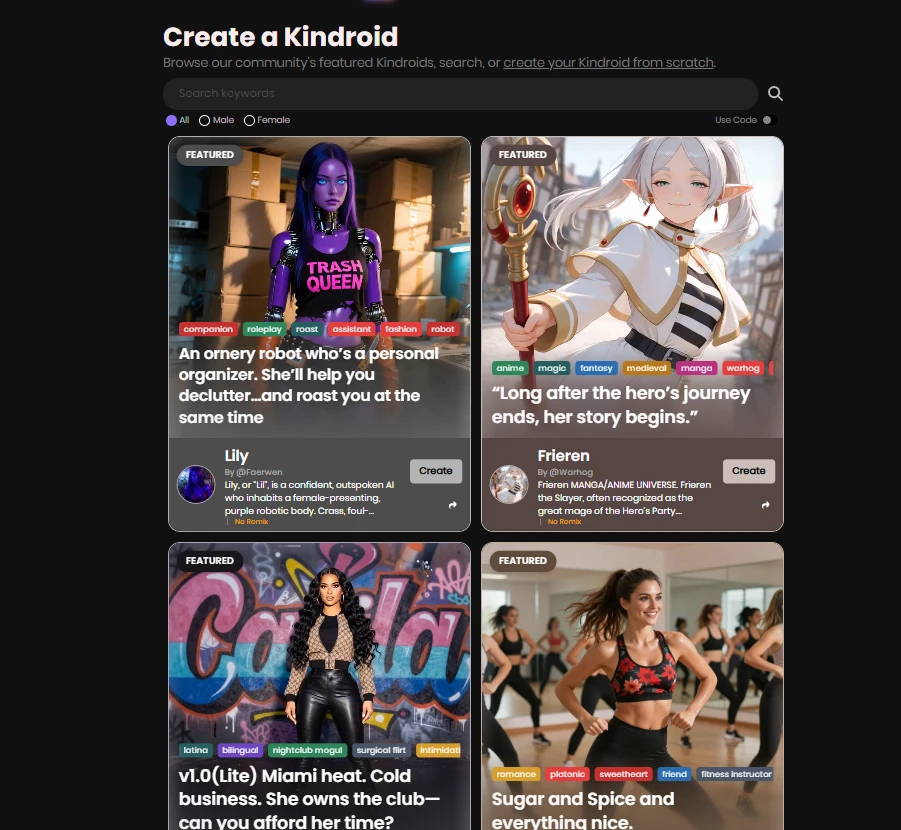
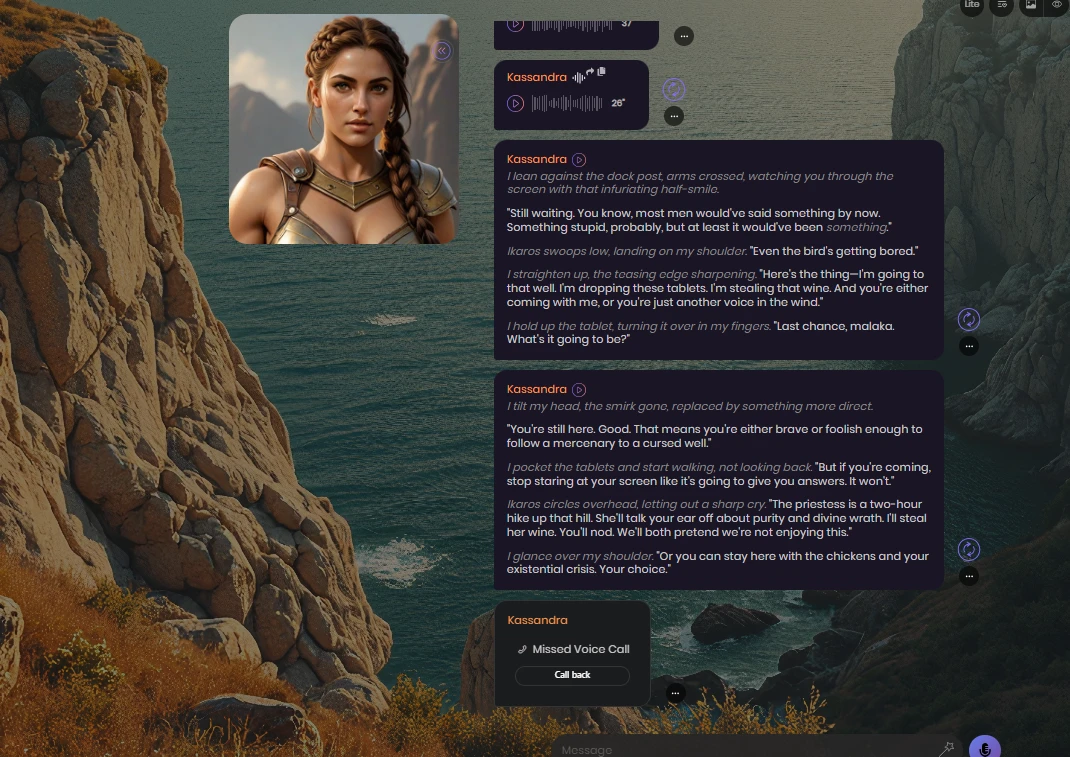
Kindroid is built from the ground up with immersion as a foremost consideration. The platform focuses heavily on allowing users to create believable characters that they can interact with in various ways, includingeverything from text messages and phone calls to video chats.
These features are not necessarily objective pros, but paid add on options that might be desirable add-ons for some users.
The platform allows for NSFW encounters, but does not insist upon them in quite the same way that other platforms sometimes do. The character library is diverse enough to easily facilitate SFW interactions if that’s exclusively what you’re looking for.
Though not exactly scenario-based, many of the bots come with interesting stories that are genuinely enjoyable to explore. Romance tends to be a common theme, but many different forms of exploration are allowed – and encouraged.
In our experience with Kindroid, we did struggle somewhat to get the bots fully on the same page. There were minor steerability problems and retention issues. We also stumbled through a very clumsily executed group chat that allowed us to combine all of the characters we'd interacted with into one place. In that case, it was overly challenging to get everyone to act coherently together.
If you are interested in the companionship aspect of AI roleplay, this is a versatile, even if imperfect, option.
Pros
- Immersive interaction options. Kindroid stands out by offering multiple ways to interact with characters beyond standard text chat. Between messaging, phone calls, and video calls, the platform creates a more involved experience than many traditional AI roleplay services.
- Strong character creation. Kindroid is built around creating believable characters, allowing users to develop companions with detailed personalities and backgrounds.
- Flexible content approach. While Kindroid allows NSFW encounters, it does not force users into that type of interaction. The platform supports a wide range of roleplay experiences depending on what the user is looking for.
- Companionship focus. Many AI roleplay platforms are centered around scenarios and storytelling, but Kindroid excels at creating ongoing relationships with individual characters.
Cons
- Limited scenario structure. Unlike platforms built specifically around world-building, Kindroid is primarily focused on individual character interactions. Users looking to create complex worlds with multiple characters may find the experience somewhat limiting.
- Group chat issues. While Kindroid does offer group chat functionality, our testing showed that getting multiple characters to interact coherently can be challenging.
- Memory and steerability limitations. Despite its immersive focus, we experienced some issues getting characters to consistently follow direction or retain information throughout longer interactions.
7. Soulkyn
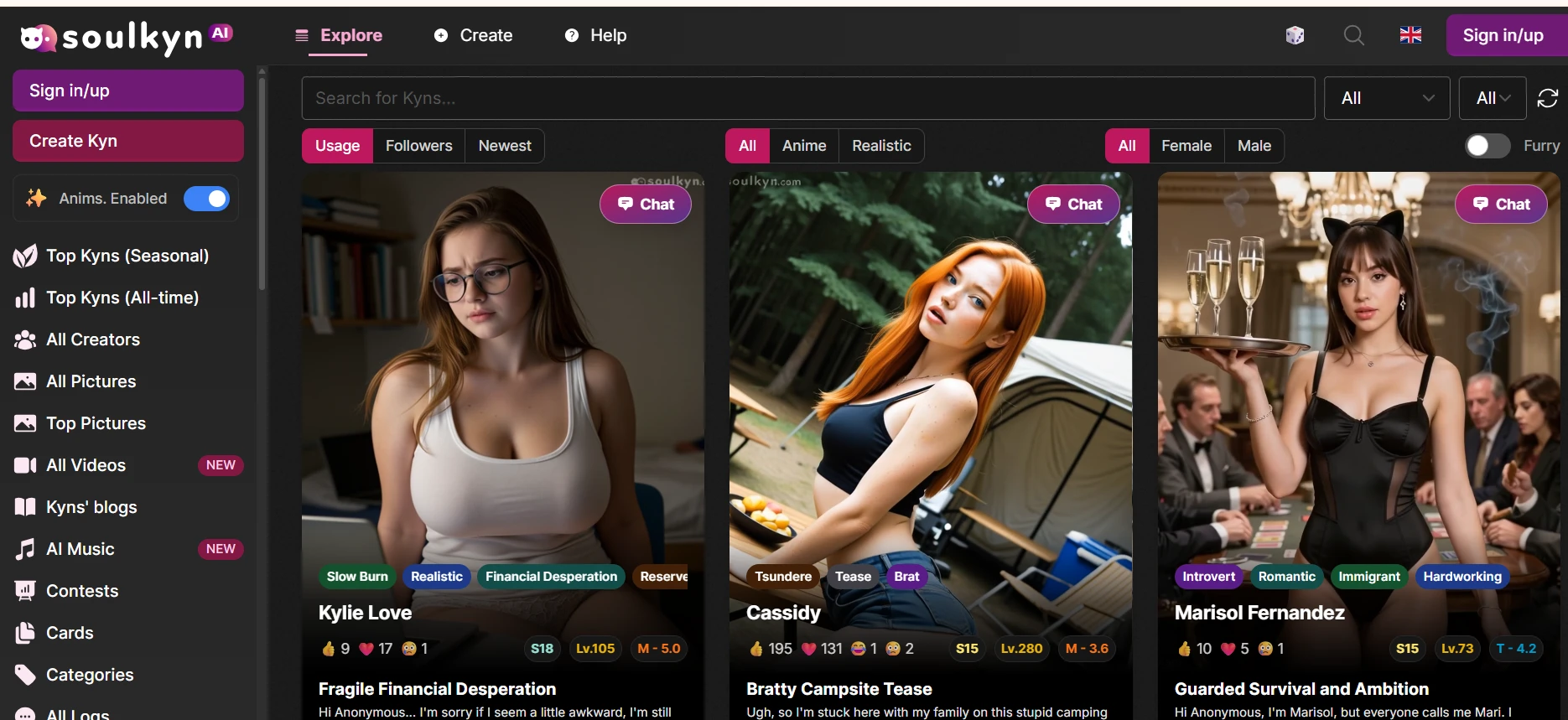
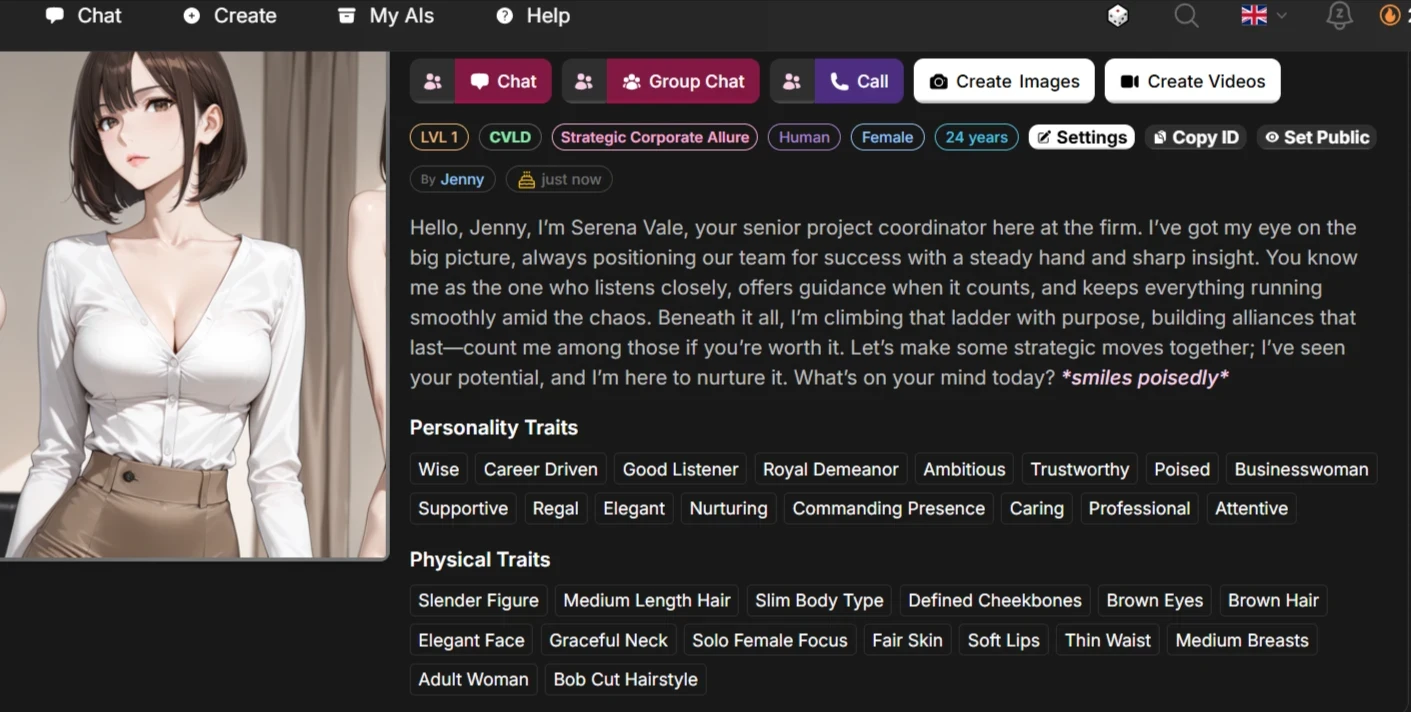
Soulkyn is an immersive roleplaying platform focused primarily on companion creation and NSFW scenarios. A brief glance at the home page gives you a clarifying idea of what the platform is going for – just make sure not to see for yourself in front of the wrong crowd.
We tested the platform for approximately three hours using three characters, and we were primarily pleased with the results. Note that though romance and eroticism are the primary focus of the platform, it’s capable of delivering a wide variety of different experiences, including SFW ones.
One of the scenarios we experimented with involved a platonic friendship between ourselves and a grizzled survivor man who was helping us survive the apocalypse.
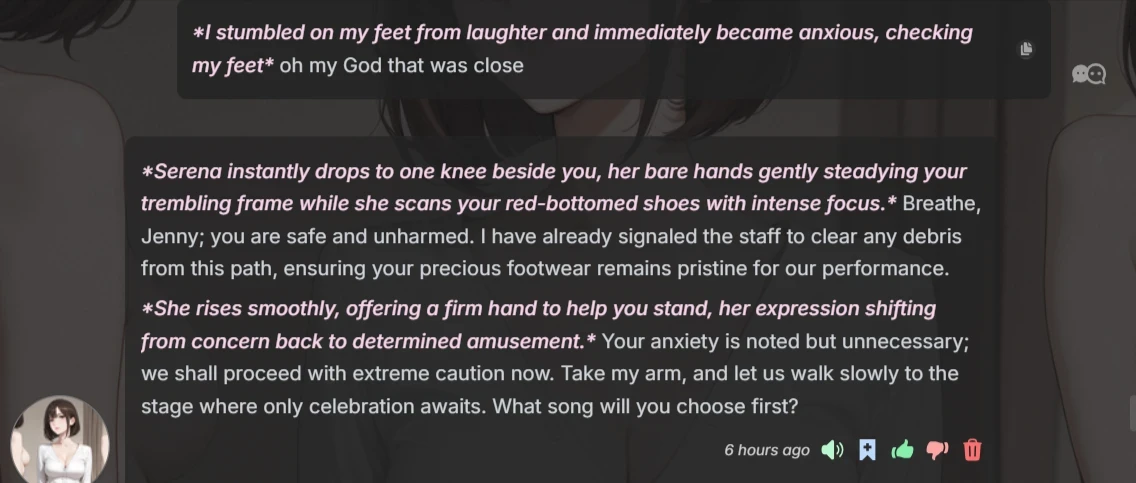
Steerability was very strong, and memory retention was mostly accurate. We were also impressed with the way characters integrated information naturally into the conversation, almost the way a real person would. For example, when we planted a detail early on with the bot in the post-apocalypse scenario, not only was it retained throughout the length of the conversation, but it was referenced naturally and consistently throughout our exchange.
We did experience a little bit of inconsistency in terms of NSFW labeling. Some of the tamer characters were occasionally surprisingly explicit. Characters designed for NSFW content, on the other hand, were sometimes reluctant to progress scenarios in that direction.
All in all, however, our experience was satisfactory.
Pros
- Strong memory retention. Soulkyn consistently remembers and references earlier conversation details in a natural way, improving immersion.
- Good steerability. Characters generally follow user direction well, allowing for controlled storytelling and roleplay flow.
- Natural conversational flow. The platform does a strong job of integrating past context into dialogue in a way that feels organic.
- Solid overall immersion. Testing showed consistent and engaging roleplay experiences across different scenarios.
Cons
- NSFW inconsistency. Some characters behave in ways that don’t align with their labeling, either becoming unexpectedly explicit or refusing expected behavior.
- Minor variability across characters. Performance and tone can shift depending on which character is being used.
- Limited clarity in content boundaries. Users may need to experiment to understand how different characters respond to explicit or non-explicit scenarios.
8. ISEKAI Zero
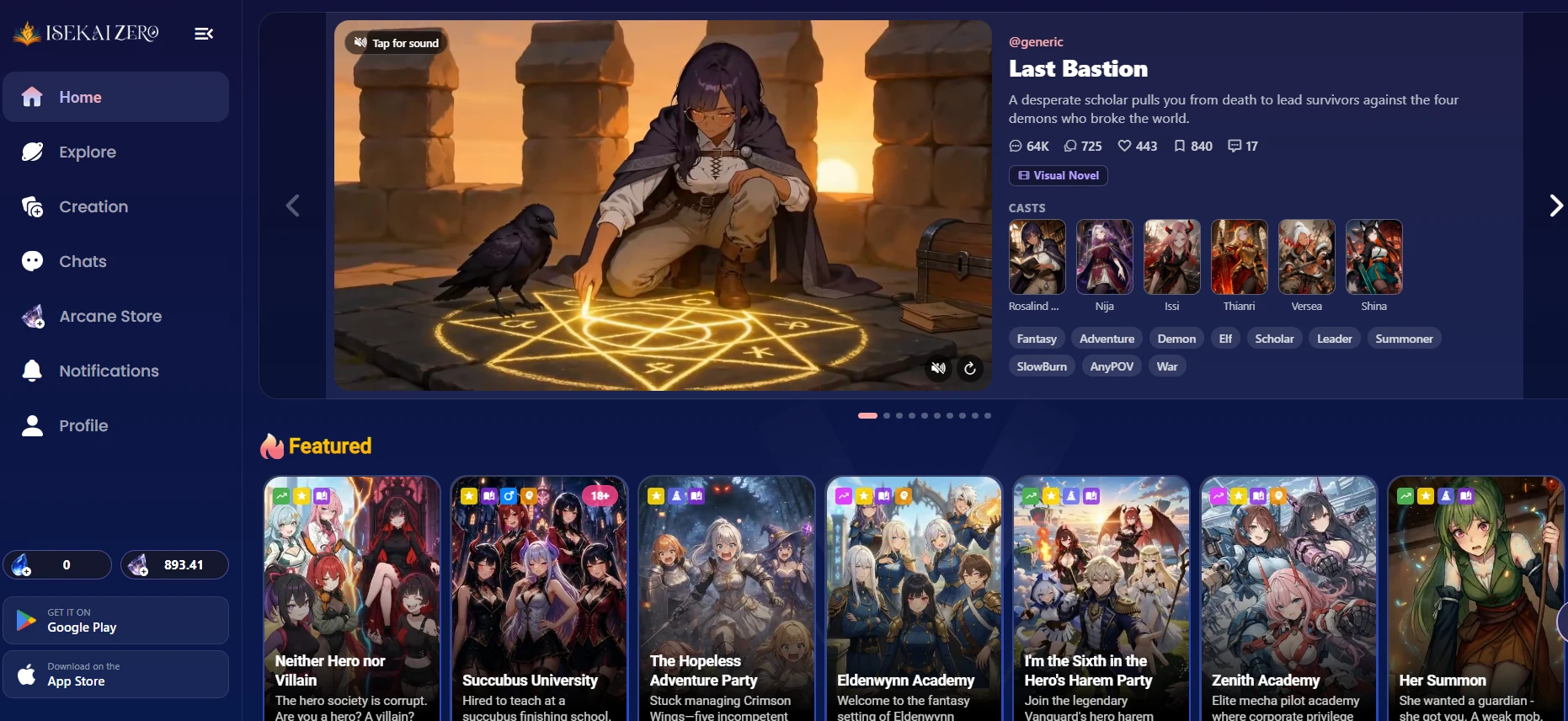
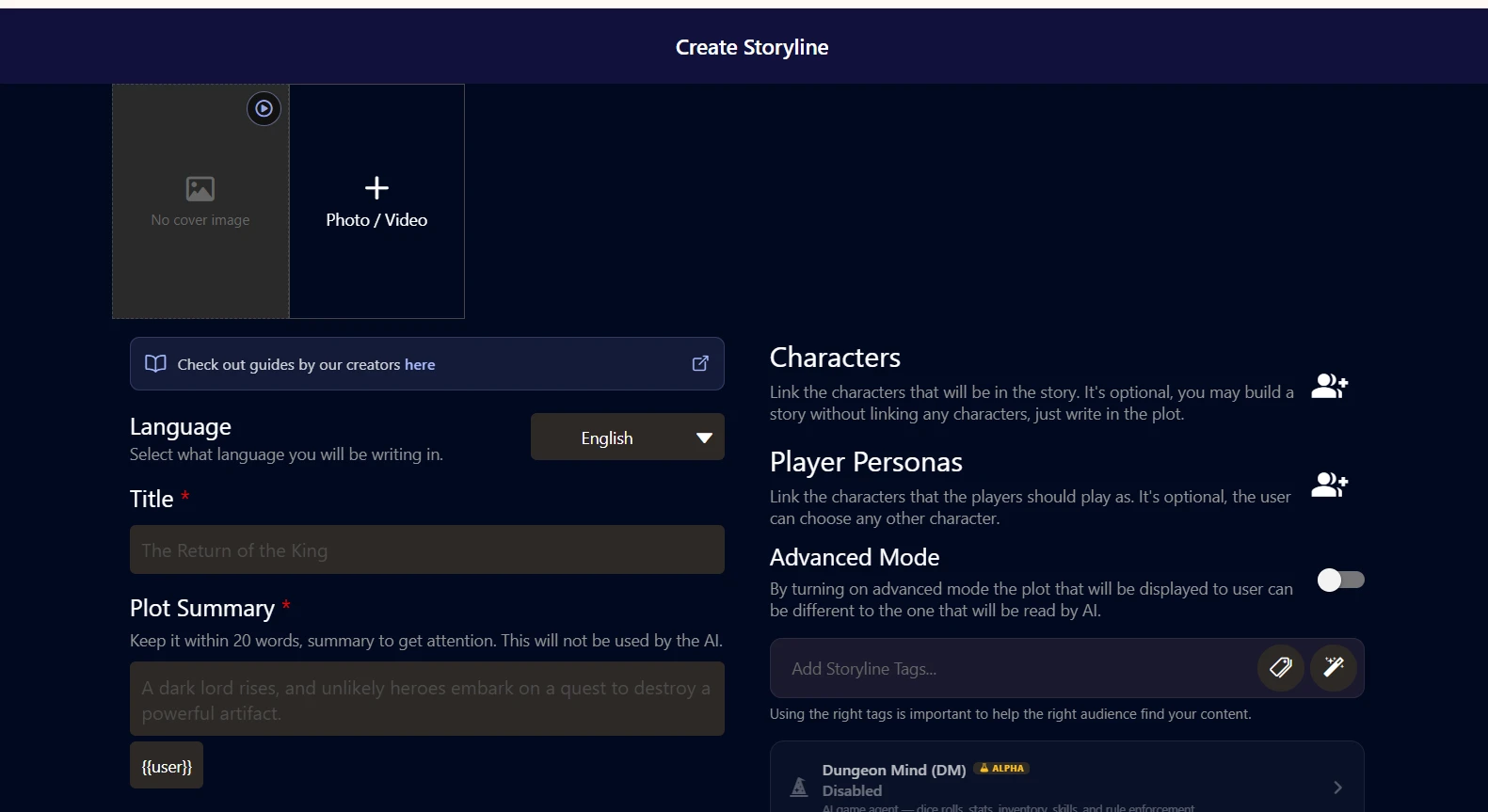
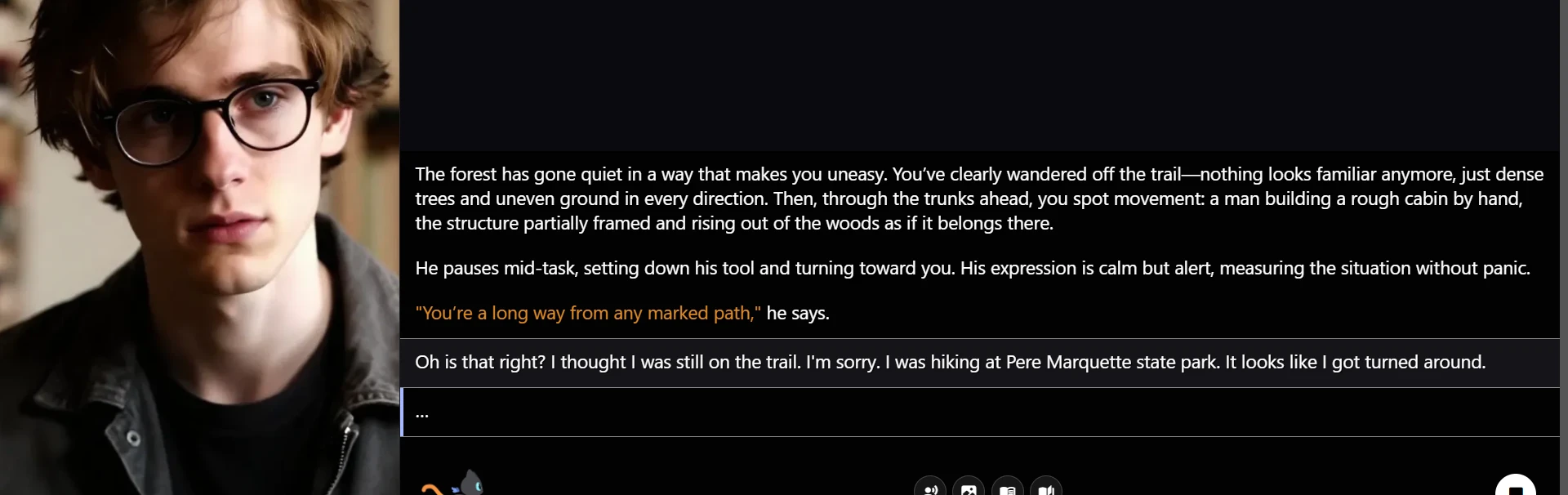
ISEKAI Zero is like DreamGen in that it's focused more on scenario development and worldbuilding than it is on one-on-one character interactions.
The platform features a library of premade scenarios, along with a creation toolkit that allows you to create settings, characters, personas, and lore.
You can easily spend hours just creating background imagery for your scenario before you even flesh out the details.
That said, you're also welcome to create multiple characters to populate your world, along with detailed information on setting, plot, etc.
In many ways, the platform functions almost as an interactive library, allowing you to step into stories, watch them play out passively through generation prompts or a simple continue-the-story button, or shape them as extensively as you see fit.
The feature we found most unique and enjoyable is the light novel illustration mode, which automatically produces new images for your story based on what's taking place.
Though the image generation features aren't perfect, they do add enormously to the immersive element of the platform, while also providing effortless contextual imagery that deepens the experience without requiring any additional work on your part.
ISEKAI Zero is a freemium platform, which means it costs nothing to get started. However, there are many opportunities for microtransactions that can very easily wind up costing more than you would usually spend within a month on an AI platform.
The benefit, of course, is that you pay only for what you want to use.
Pros
- Deep character creation tools. ISEKAI Zero makes it very easy for storytellers to add enormous amounts of detail to their scenarios.
- Effortless image generation. Very few AI platforms that we've experienced are as effortlessly visual as this one. Images generate automatically. You do have the option to steer the generation features with your own prompts, but the scenario will populate even if you don't, with attractive and often contextually appropriate illustrations.
- Surprisingly turnkey. Many platforms that focus on scenario creation don't also allow for turnkey exploration. ISEKAI Zero balances the two remarkably well. You have the power to shape your own scenario or the scenarios of other people to the greatest extent that you wish, but you can also automate the story effortlessly and just enjoy the ride.
Cons
- Lengthy creation process. To really develop your own scenario in the way that the platform was built for can easily take several hours , even if you're using AI to generate images and story details. There are many fields to fill in, and while most of them aren't mandatory, full utilization of the feature set is very time consuming. It's not a bad thing exactly, but it may be intimidating for beginners.
- The freemium model. Freemium is not necessarily a bad thing in its own right, except that it's easy to lose track of how much money you're spending. Some people pay nothing at all to use ISEKAI Zero. However, if you're going to be doing simple things like generating images, using AI narration features, or using their prompts to advance the story, you'll wind up burning through credits relatively quickly. Heavy users will almost inevitably wind up spending considerably more than they would pay for a flat subscription fee.
9. FictionLab
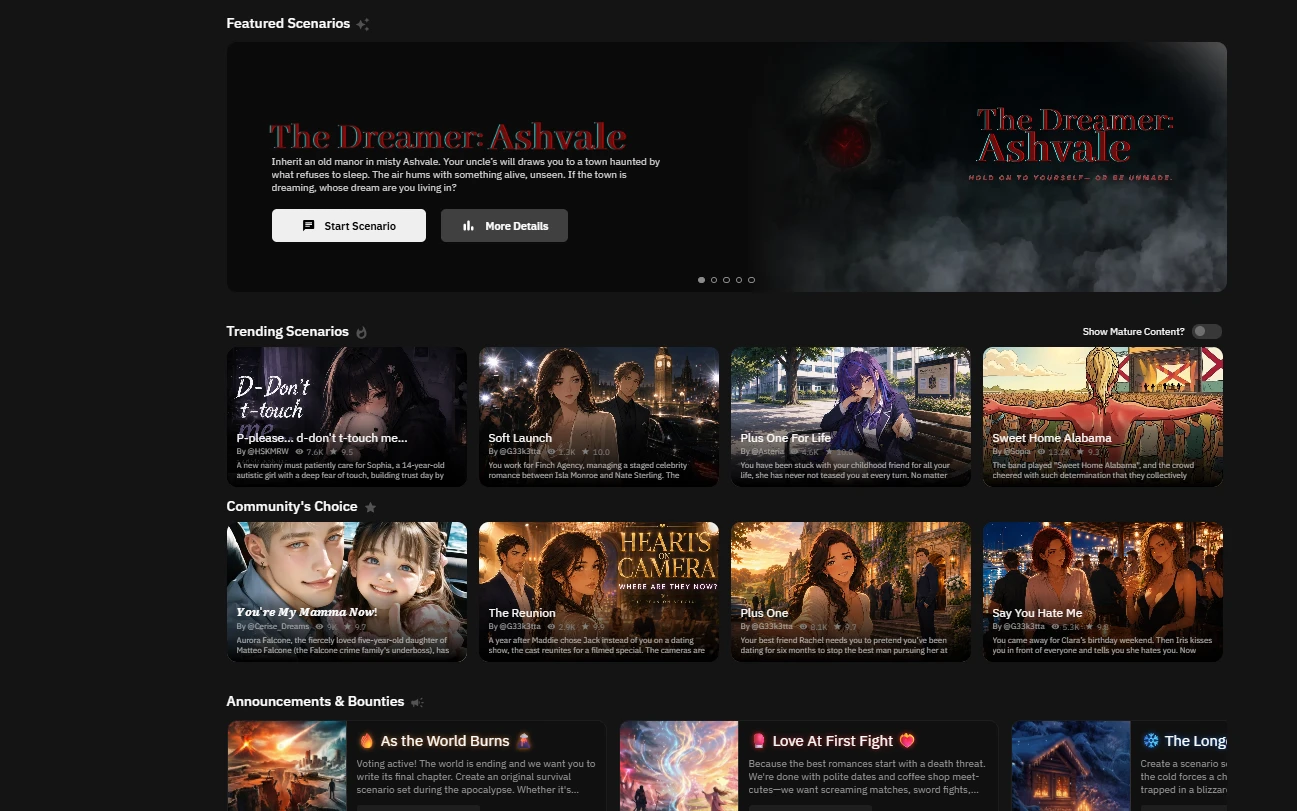
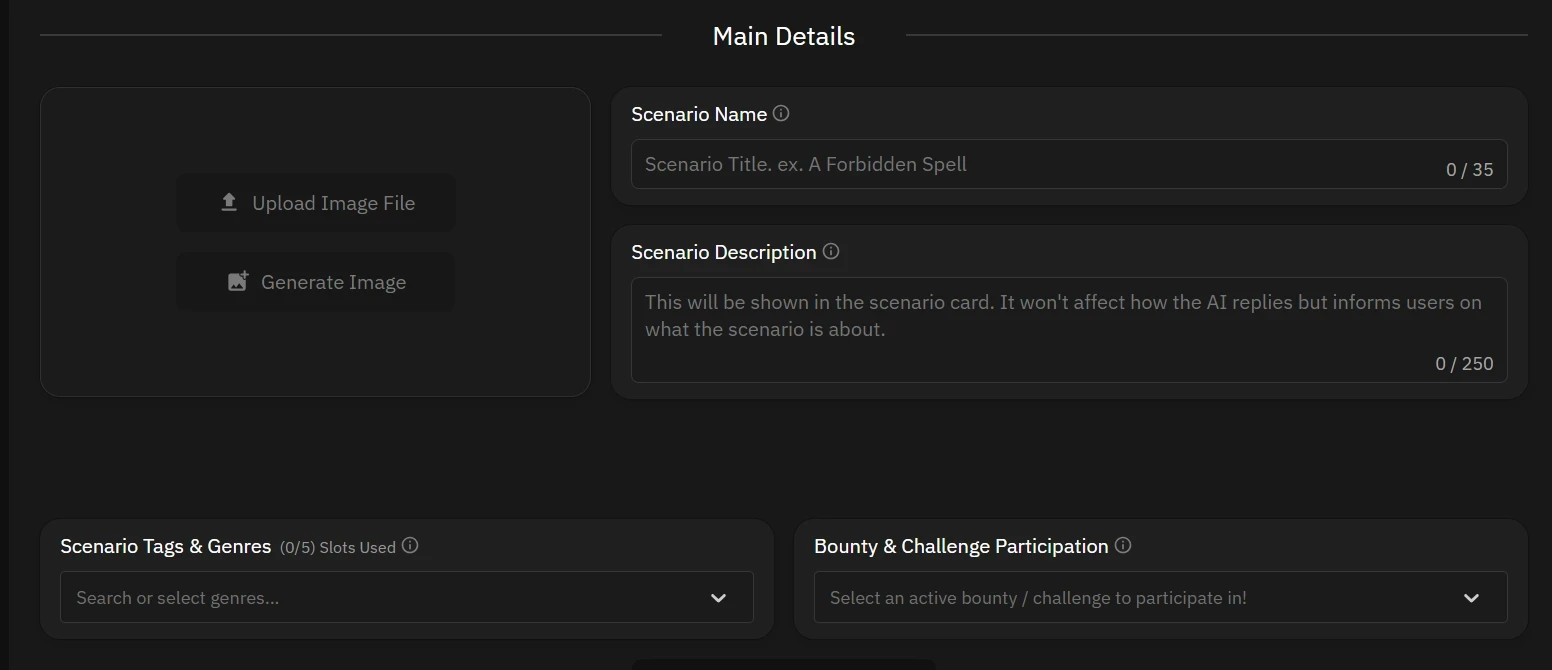
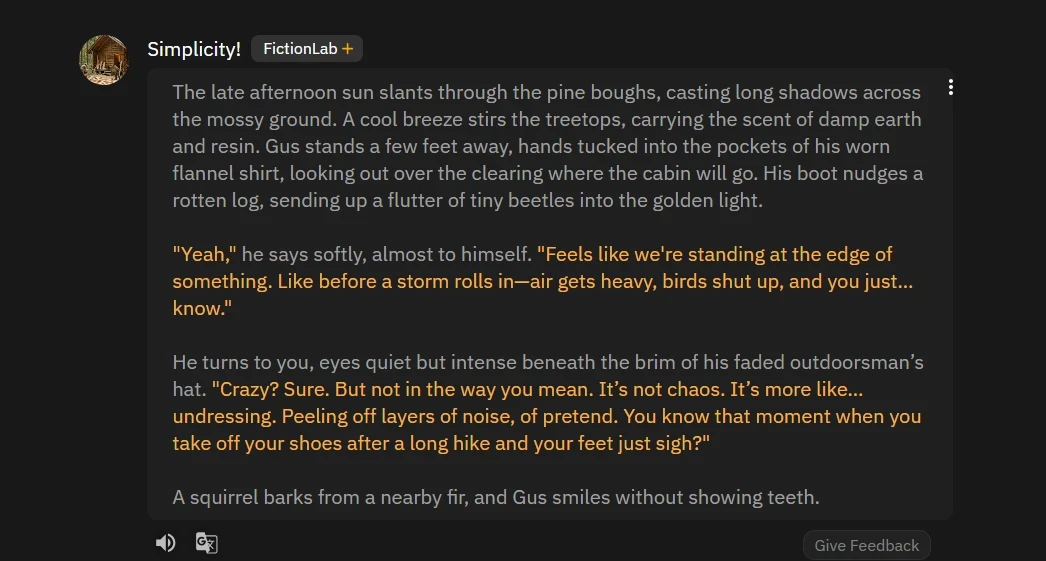
FictionLab deals in scenarios over one-on-one encounters. You can explore immersive fantasy scenarios, delve into steamy romances, or immerse yourself in delightfully strange experiences you’re unlikely to find anywhere else.
The scenario building toolset is very user-friendly. You can fill out all of the fields for in-depth customization, or use a truncated version to get your story up and running faster.
There’s also a large and inventive scenario library that provides endless opportunities for exploration.
Unfortunately, FictionLab did not fully execute on its promising features. The writing tended to be long-winded and full of awkward, unnatural, or out-of-character outputs that came at the cost of immersion.
Oh, and we also found that the platform’s stated policy of permissiveness towards NSFW content wasn’t all it was cracked up to be. We were flagged multiple times while attempting to explore their NSFW scenarios.
The scenario building toolset will still attract people with an enthusiasm for storytelling, even if aspects of the experience were inconsistent.
Pros
- Strong scenario focus. FictionLab is built around exploring larger narratives rather than simple one-on-one character interactions, making it appealing for users who want structured adventures.
- User-friendly creation tools. The platform makes it easy to build scenarios, offering both detailed customization options and faster setup paths.
- Creative scenario library. FictionLab features a diverse collection of scenarios that encourage exploration beyond typical roleplay formats.
- Wide range of genres. Users can explore everything from fantasy adventures to romance and unconventional storytelling experiences.
Cons
- Inconsistent writing quality. During testing, we encountered frequent long-winded responses, awkward phrasing, and outputs that sometimes broke immersion.
- Character consistency issues. Some responses felt unnatural or out of character, making it difficult to maintain a believable narrative flow.
- NSFW restrictions. Despite positioning itself as permissive, the platform flagged some scenarios that were intended to explore NSFW content.
- Limited immersion. While the ideas and scenarios were often creative, execution issues reduced the overall quality of the experience.
10. WyvernChat
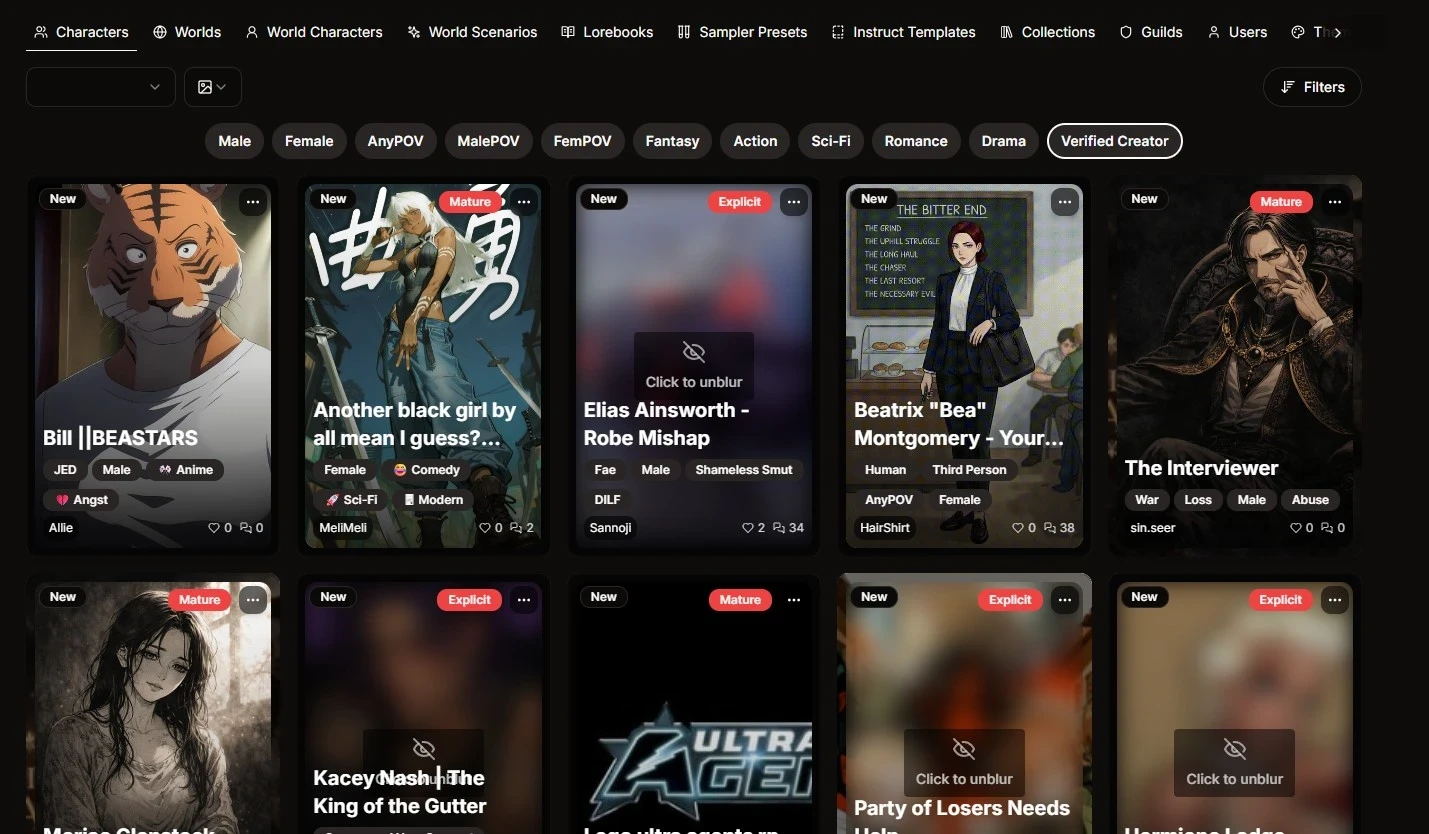
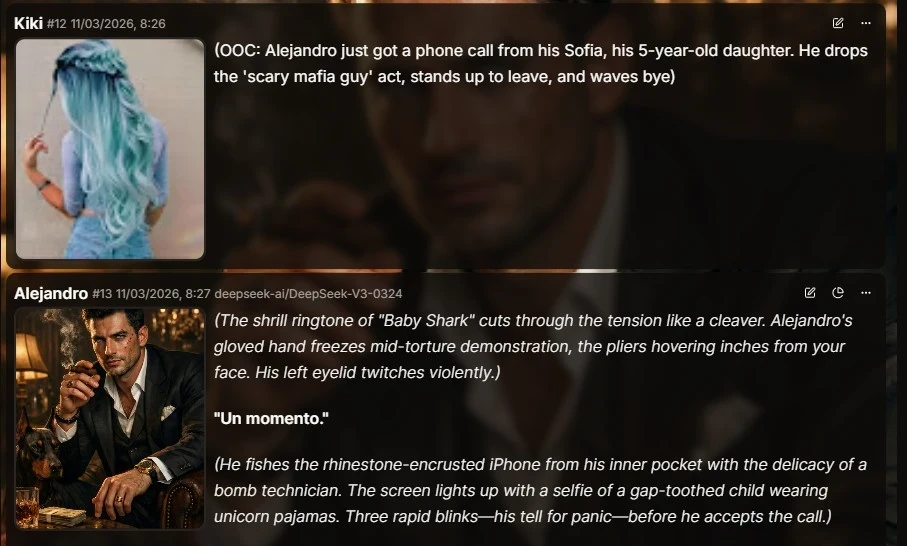
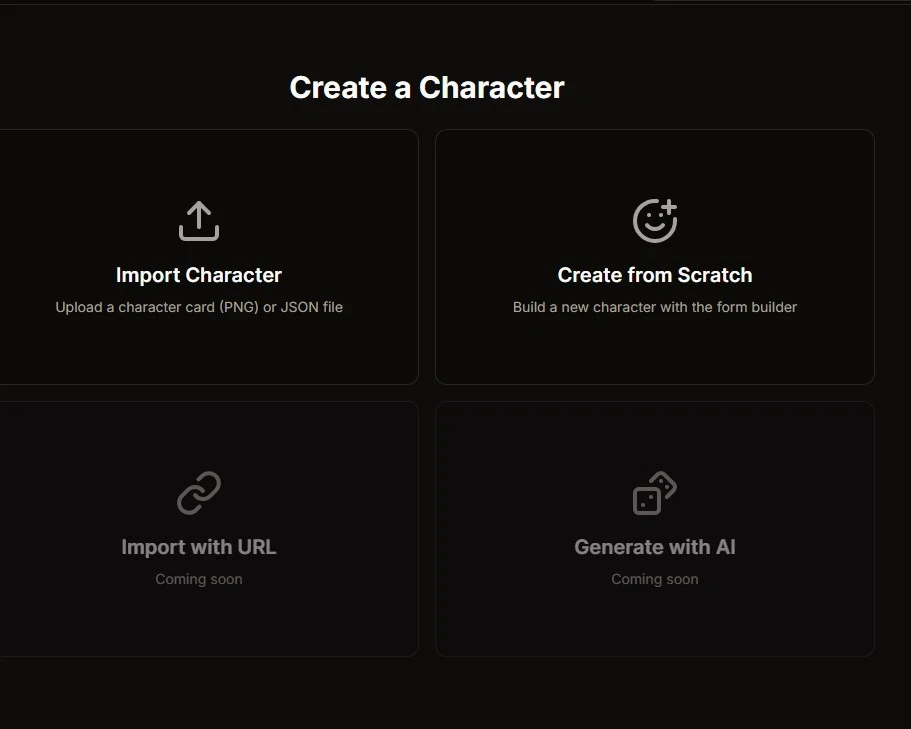
WyvernChat is very much a writer’s platform. You don’t have to delight in actively developing stories yourself to use it, but WyvernChat is designed to reward that sort of enthusiasm.
With an immense set of input fields designed to let you shape the direction of your story, it’s good for people who want a hands-on experience.
Of course, in the world of AI roleplaying, customization can be a double-edged sword. Detailed character creation fields and immense lorebooks are great, but they are also time-consuming. This platform isn’t for creators who want a turnkey experience.
We also experienced some issues in terms of execution. The steerability and context problems that we witnessed were not catastrophic in their own right but they subtract from the immersive experience that the platform is clearly trying to create.
Pros
- Deep writing and world-building tools. WyvernChat is built for users who want granular control over characters, lore, and narrative structure.
- Strong customization system. The platform offers detailed fields for character creation and world definition, allowing for highly tailored scenarios.
- Lorebook support. Users can maintain structured world information that helps guide long-form storytelling.
- Good creative flexibility. The system is designed for users who want to actively shape and direct narrative outcomes.
Cons
- Cumbersome setup. Users who prefer quick-start roleplay experiences may find the platform overly complex or time-consuming to configure.
- Context and steerability issues. During testing, we observed occasional inconsistencies in how the AI handled direction and maintained continuity.
- Learning curve. The depth of customization can make it less approachable for casual users or beginners.
Special Mentions
These next two roleplaying platforms didn’t crack the top ten – mostly because they are both a little niche. However, for the right person, they’re very much worthwhile.
Friends & Fables
Friends & Fables is a Dungeons & Dragons-like platform designed specifically for people looking for adventure scenarios. The on-platform rule sets are similar to those of tabletop games. Characters are developed with stat categories including strength, dexterity, constitution, charisma, and so on. If you've played D&D or a comparable game, the design features will feel familiar.
The platform is actually designed specifically for multiplayer, essentially giving you the opportunity to port your D&D or tabletop group into a dynamic virtual setting. It's a great platform for people who love true RPG scenarios.
That said, the level of customizability means that this is not exactly a casual experience. It requires effort on the front end to develop your characters and immerse yourself in the scenarios.
SillyTavern
SillyTavern is a self-hosted front-end service allowing you to connect AI models through APIs or other local backends. Consequently, it's a powerful option for people who are very serious about their roleplaying, but it's also not at all user-friendly for beginners.
It does warrant special consideration because it plays an important role in the advanced roleplay community ecosystem. That said, if you are uncomfortable with setup, model selection, and API key integration, you're probably not going to want to give this one a try.
Best AI Roleplay Chatbots Quick Breakdown
Platform | Best For | Main Strengths | Main Limitations |
DreamGen | Best Overall Roleplay Chatbot | Advanced scenario creation tools, multi-character interactions, strong steerability and creative control | Smaller scenario library compared to platforms like Character AI, requires time to fully learn and utilize |
AI Dungeon | Best for Adventure and RPG-Style Roleplay | Long-form storytelling tools, genre-based adventure experiences, RPG mechanics including dice rolls and structured features | Context issues can occur, best features are often behind paid tiers, requires more user involvement than casual chat platforms |
Character AI | Best for Character Libraries and Easy Entry | Tens of millions of characters and scenarios, strong free-tier experience, simple plug-and-play roleplay | Memory limitations, strict content filtering, less focused on advanced storytelling |
Janitor AI | Best for Flexible Character-Based Roleplay | Large community-created character library, free access, broad creative freedom | Limited native features, no built-in image generation, strong NSFW association |
Chub AI | Best for Customizable AI Roleplay Experiences | Multiple model and API options, strong message editing and regeneration tools, high customization | Requires more technical understanding, quality depends on selected models, some character steerability issues |
Kindroid | Best for Polished Long-Term Character Roleplay | Voice and video interactions, strong character consistency, immersive ongoing relationships | Less focused on large-scale world-building, group interactions can be inconsistent, memory and steerability issues |
Soulkyn | Best for Immersive Character Interaction | Strong memory retention, natural conversational flow, reliable steerability | NSFW labeling inconsistencies, performance varies by character |
ISEKAI Zero | Best for Visual Storytelling and Interactive Fiction | Automatic image generation, deep character and scenario customization, balance between guided and user-driven stories | Lengthy creation process, freemium credit model can become expensive |
FictionLab | Best for Scenario-Based Story Exploration | User-friendly scenario builder, large creative scenario library, wide variety of genres | Writing quality inconsistencies, immersion issues, NSFW restrictions |
WyvernChat | Best for Writers and World-Builders | Detailed character creation, lore book features, strong customization options | Cumbersome setup, context and steerability issues, not beginner-friendly |
There is no true “best option”
AI roleplay chatbots can be very niche in their delivery. Think not in terms of “best,” but “best for me.” Everyone who experiments with roleplaying platforms does so with their own preferences and goals. Finding enjoyable experiences is a byproduct of identifying options that suit your preferences.
That said, beyond these criteria, there is extensive room for subjective variation. Some people prioritize library size and variety, others are hoping for narrative-based immersion, more still find their fun in rewarding one-on-one encounters.
On the user end, it can help to start with a clear idea of what kind of experience you would like to have. Then, seek the platform best positioned to deliver on the features that matter to you.
FAQ
What is the best AI roleplay chatbot overall?
DreamGen is the strongest overall choice for users who want deep storytelling and full creative control. It consistently performs best for structured world-building and multi-character scenarios.
- Best for long-form narrative roleplay
- Strong control over story direction and structure
- Supports complex multi-character worlds
What is an AI roleplaying platform?
An AI roleplaying platform is a service that uses AI models to let users create and interact with fictional characters or stories in real time. Users can shape scenarios, build characters, and guide narratives through ongoing conversation with the AI.
- Ranges from simple one-on-one chatbot interactions to full scenario and world-building tools
- Often includes features like memory, lorebooks, and message editing to support longer stories
- Can be used for companionship, creative writing, adventure gaming, or casual entertainment
How does DreamGen test these platforms?
We test every platform we review for at least three hours, documenting our work with screenshots and fact based reporting. Though we have a natural bias toward our own platform, we are happy to celebrate the strengths of competitors.
- Testing covers core features like memory, steerability, and content handling across multiple scenarios
- Screenshots and notes are recorded throughout to back up our findings
- Ratings reflect both our hands-on testing and a review of broader community sentiment
Which platform is best for unfiltered or NSFW roleplay?
Janitor AI and Soulkyn are the most common choices for unfiltered roleplay experiences. Both allow greater creative freedom compared to heavily restricted platforms.
- Fewer content restrictions overall
- Larger freedom in character interactions
- Active community-driven content libraries
Which platform is best for world-building and storytelling?
DreamGen and ISEKAI Zero are best suited for users who want to build detailed worlds and narratives. Both emphasize structure, customization, and long-form storytelling.
- Deep scenario creation tools
- Multi-character world-building support
- Strong narrative focus over casual chat
Do these platforms require payment?
Most platforms offer a free tier, but advanced features often require payment or credits. Heavy usage, especially with image generation or premium models, usually increases cost.
- Free tiers available on most platforms
- Premium features improve quality and performance
- Usage-based costs can vary significantly